News
Screwworm – Alarming US Case: 1st Human Infection Sparks Response

Table of Contents
First Human Case of Dangerous Screwworm Parasite Detected in United States
U.S. health officials have confirmed the country’s first human case of a flesh-eating parasitic fly known as the New World screwworm (NWS), marking a significant and concerning public health development.
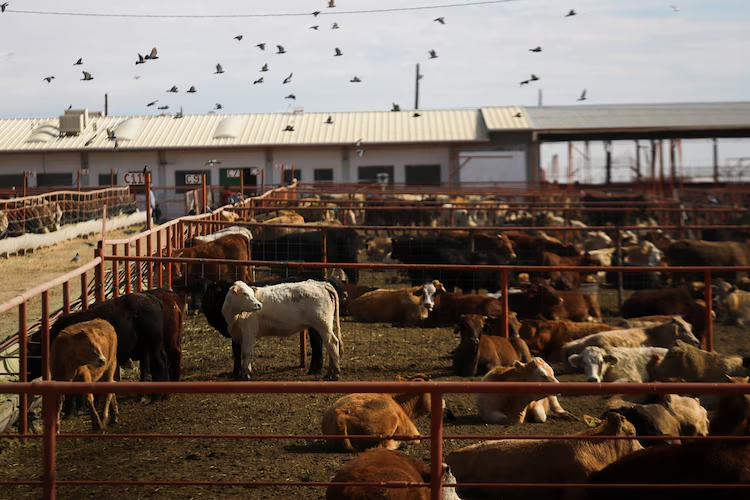
The case was announced by the U.S. Department of Health and Human Services (HHS) on Monday. According to an HHS spokesperson who spoke to ABC News, the patient had recently returned from travel to El Salvador. Officials were quick to emphasize that the immediate risk to the general U.S. public remains very low.
This incident has triggered a major coordinated response from federal agencies to prevent the establishment of this destructive parasite within U.S. borders.
What is the New World Screwworm?
The New World screwworm (Cochliomyia hominivorax) is a devastating species of parasitic fly. Unlike common maggots that consume dead tissue, screwworm larvae feed exclusively on the living flesh of warm-blooded animals, including humans. The name “screwworm” originates from the larvae’s gruesome method of burrowing head-first into a host’s tissue using sharp mouth hooks, creating screw-like tunnels.

Infestations, known as myiasis, cause extensive tissue damage, leading to severe pain, secondary infections, and, if left untreated, death.
The Source of the Outbreak and US Response
For decades, the screwworm was successfully eradicated from the United States through an innovative sterile insect technique (SIT). This program involved sterilizing male flies with radiation and releasing them to mate with wild females, effectively crashing the population over time.
However, Central America and Mexico are currently battling a severe outbreak among livestock. Data from the U.S. Department of Agriculture (USDA) reveals a staggering spike in cases. For instance, Panama’s infections skyrocketed from an annual average of 25 to over 6,500 confirmed cases in 2023. The parasite has now been detected in seven Central American nations, breaking a long-standing containment barrier.
This spread has put U.S. authorities on high alert. The USDA has stated that the screwworm “is not only a threat to our ranching community — but it is a threat to our food supply and our national security.”

A multi-pronged defense initiative is now underway, including:
- Constructing a new sterile fly production facility in Texas to ramp up SIT efforts.
- Deploying mounted patrol officers and detector dogs to monitor wildlife and imports at ports of entry.
- Implementing and carefully managing import bans on live cattle, horses, and bison from affected regions.
- The FDA issuing an Emergency Use Authorization (EUA) for animal drugs to treat and prevent screwworm infestations.
Risk to Humans and Travel Precautions
While the risk within the U.S. is currently minimal, the Centers for Disease Control and Prevention (CDC) notes that travelers to outbreak areas are at higher risk. Key risk factors include:
- Spending time near livestock.
- Sleeping outdoors.
- Having any form of open wound, including minor cuts or surgical incisions.
Travelers to affected regions are urged to keep wounds clean, covered, and thoroughly checked. Any wound that appears to have developing larvae—often described as having a bubbling or moving appearance—requires immediate medical attention.
The detection of this case in a human, while isolated, serves as a critical reminder of the constant threat posed by invasive species and the importance of robust biosecurity measures. Federal agencies continue to monitor the situation closely to protect both public health and the nation’s agricultural economy.