
News
Lawsuit Smashed: Supreme Court Kills FL’s #1 Bid!!

Table of Contents
Supreme Court Hands Florida a Major Loss in Trucker License Fight Against California and Washington
WASHINGTON – In a decisive blow to Florida’s legal battle against two Western states, the U.S. Supreme Court on Tuesday rejected the Sunshine State’s long-shot lawsuit that sought to block California and Washington from issuing commercial driver’s licenses (CDLs) to truckers who don’t speak English or lack legal immigration status.
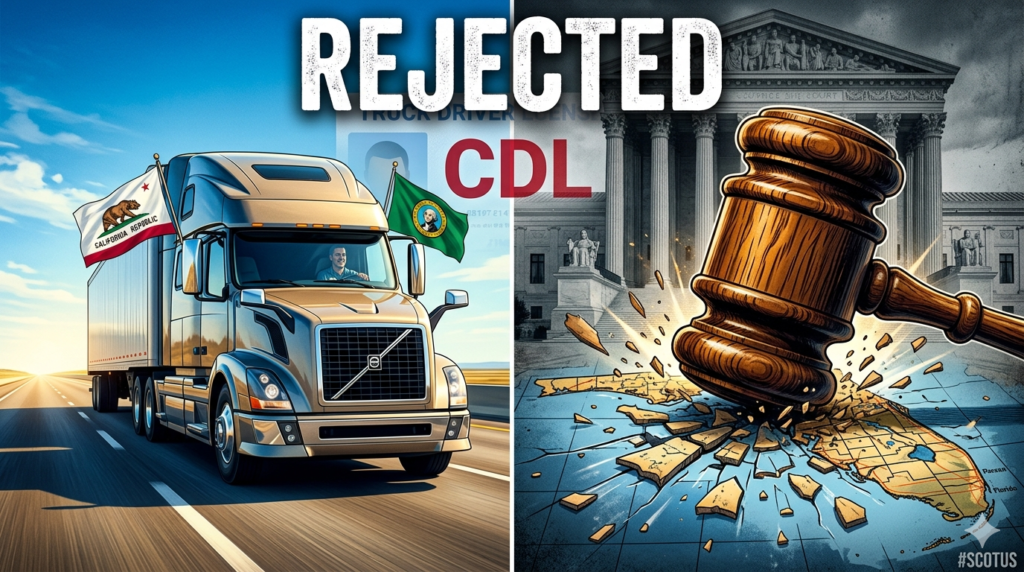
The high court’s order, issued without detailed explanation, marks the end of Florida’s aggressive attempt to use an original jurisdiction lawsuit—a rare legal move where states sue each other directly in the Supreme Court. Republican-led Florida had argued that the Democratic-led Western states were openly defying federal immigration laws by granting CDLs to non-citizens and non-permanent residents.
What Sparked the Legal Firestorm?
The case traces back to a deadly crash in Florida last year that claimed three lives. According to court records and news reports, the driver—identified as Harjinder Singh, a man from India—allegedly made an illegal U-turn, triggering the collision. Despite being in the U.S. without authorization, Singh held a valid commercial driver’s license from California and had previously been licensed by Washington state.

Florida officials seized on the tragedy to launch a legal offensive, arguing that Western states are essentially creating a “backdoor immigration policy” that endangers American roads. “States have no authority to license drivers who are unlawfully present in this country,” Florida’s legal team told the justices.
Why the Supreme Court Said No
The Supreme Court typically hears appeals from lower courts, but it has discretion to take up original lawsuits—disputes between states that begin and end at the nation’s highest bench. On Tuesday, a majority of the justices declined to hear Florida’s case, letting stand the existing practices in California and Washington.

Only Justices Clarence Thomas and Samuel Alito dissented, as they frequently do when the court rejects original jurisdiction cases. In a brief note, they argued that the court has no legitimate choice but to hear such state-versus-state disputes. However, their view did not sway the rest of the court.
A Separate Battle Over Trump-Era Rules
In a related development, a federal appeals court has already blocked a Trump administration proposal that would have imposed new, severe restrictions on which immigrants could obtain CDLs for semi-trucks or buses. That ruling remains in effect, meaning the legal tug-of-war over trucker licenses is far from over.
For now, states like California and Washington can continue issuing CDLs to qualified applicants—including those without legal status—so long as they meet safety and testing requirements. Advocates for immigrant truckers applauded the Supreme Court’s decision, while Florida’s governor called it “a frustrating roadblock to enforcing immigration laws.”
What This Means for American Drivers
If you share the road with big rigs, here’s why this matters: commercial driver’s licenses are critical for safety. They require written exams, road tests, and medical checks. Supporters of the Western states’ policies argue that licensing all drivers—regardless of immigration status—actually makes highways safer because it ensures everyone behind the wheel of a 40-ton truck has passed the same tests.
Florida’s rejected lawsuit claimed the opposite: that issuing CDLs to non-citizens encourages illegal immigration and increases crash risks. But the Supreme Court’s refusal to hear the case suggests the justices are not ready to wade into this politically charged fight—at least not yet.
Bottom Line
The Supreme Court’s move is a major win for California and Washington and a stinging defeat for Florida. It also sends a signal that the high court is hesitant to rewrite immigration enforcement rules through state lawsuits. For truckers, immigrant communities, and anyone who drives near a semi, the battle over CDLs will continue in lower courts—and maybe, someday, back at the Supreme Court.
Sources: AP News, Supreme Court of the United States




Table of Contents:
Maria Bartiromo Leaves Fox News After 12 Years

Maria Bartiromo, one of the most recognizable names in American business television, is leaving Fox News Media after more than 12 years with the company.
Fox News Media announced on September 3, 2026, that Bartiromo is no longer with the network, effective immediately. The company thanked her for her 12½ years of work and wished her well in the next chapter of her career. Fox did not give a reason for the departure.
The announcement came as a surprise to many viewers because Bartiromo had been a familiar presence on both Fox Business Network and Fox News.
What Happened to Bartiromo?
Bartiromo’s final episode of Mornings with Maria aired Thursday morning. Beginning Friday, the program will become Mornings with FOX Business and will use rotating anchors.
Her weekly program,Bartiromo’s Wall Street, will also receive a new name: FBN’s Wall Street. Cheryl Casone will host the program initially, with other anchors expected to rotate into the position.
Meanwhile, Sunday Morning Futures will be hosted by Jason Chaffetz this Sunday while Fox News considers a permanent replacement.
A Remarkable Career on Wall Street:
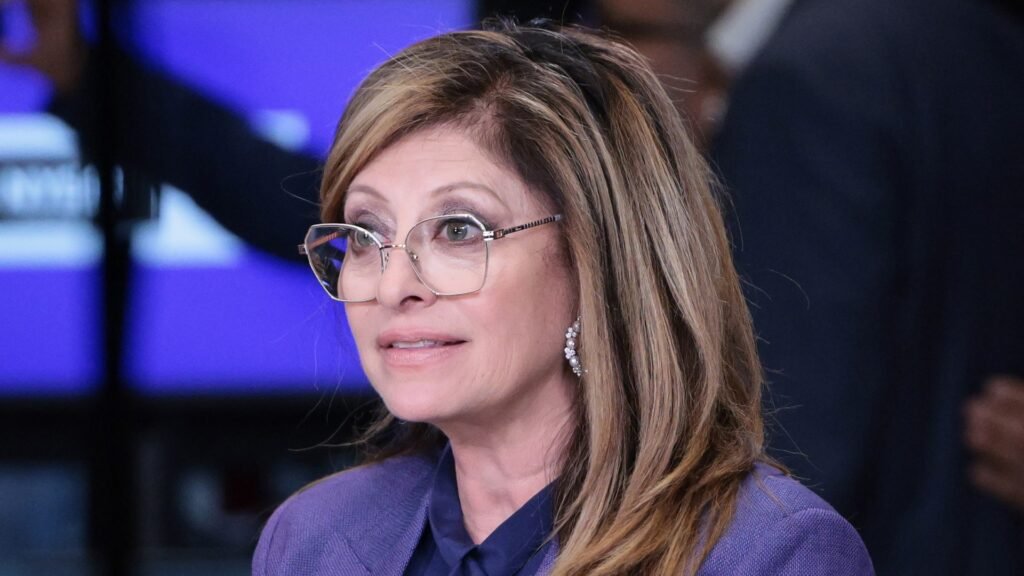
Although her Fox departure is a major change, Bartiromo has already built an extraordinary career in financial journalism.
Before joining Fox Business in 2014, she spent about two decades at CNBC. She became particularly well known for her work covering Wall Street and financial markets.
In 1995, Bartiromo became the first journalist to report live regularly from the floor of the New York Stock Exchange. The achievement helped establish her as a pioneering figure in television financial journalism.
Over her career, she has interviewed major business and political figures and received numerous awards, including two Emmy Awards and a Gracie Award. She was also inducted into the Cable Hall of Fame in 2011.
An Uncertain but Promising Next Chapter

The biggest unanswered question is what Maria Bartiromo will do next.
Fox News has not publicly explained why the relationship ended, and Bartiromo had not publicly commented on the announcement at the time of the initial reports. That leaves considerable uncertainty surrounding her immediate plans.
Despite the abrupt ending, her long career gives her several possible paths. She could return to financial broadcasting, expand her writing and commentary work, or pursue another role in media and business.
For now, her departure marks the end of an important era at Fox Business. But given Bartiromo’s experience, influence and long-standing presence in financial journalism, this may be less of an ending than the beginning of a new chapter.
Why Maria Bartiromo Remains Important

Maria Bartiromo has spent decades helping audiences understand markets, business and economic policy. From her pioneering work at the New York Stock Exchange to her years at CNBC and Fox, she has remained a prominent figure in American financial media.
Her sudden exit from Fox News may be disappointing for longtime viewers, but her career record suggests that her influence is unlikely to disappear anytime soon.
The next move from Maria Bartiromo could therefore be one of the most closely watched developments in financial media.

Major League
Table of Contents
Cardinals vs Cubs: Rivalry Delivers Another Memorable MLB Battle
Cardinals vs Cubs: Rivalry Delivers Another Memorable MLB Battle
Cardinals vs Cubs: Rivalry Delivers Another Memorable MLB Battle
Cardinals vs Cubs:

The Cardinals vs Cubs rivalry once again lived up to its reputation as one of Major League Baseball’s most exciting matchups. Fans witnessed an intense contest filled with dramatic moments, standout performances, and momentum swings that kept everyone on the edge of their seats. While one team celebrated a hard-earned victory, the other was left searching for answers after a disappointing defeat.
For decades, the rivalry between the St. Louis Cardinals and the Chicago Cubs has produced unforgettable games, and this latest encounter added another exciting chapter to their historic competition.
Strong Performances Light Up the Diamond
Both teams entered the game determined to gain an important advantage in the standings. The Cardinals relied on timely hitting and disciplined pitching, while the Cubs answered with aggressive offense and solid defensive plays.
Several players stepped up during key moments, delivering clutch hits and making spectacular defensive stops. The crowd responded with thunderous cheers as the game remained competitive from the opening inning until the final out.
Official MLB scores and game summaries are available at:
https://www.mlb.com
Cardinals Capitalize on Key Opportunities;
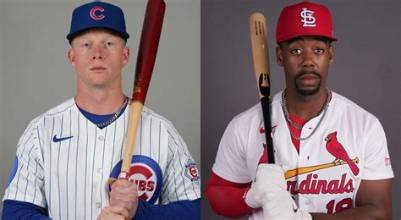
The Cardinals took advantage of scoring chances by delivering timely hits with runners in scoring position. Their pitching staff also limited damage during critical innings, helping secure valuable momentum.
Strong teamwork and smart decision-making allowed St. Louis to stay composed even when the Cubs threatened to rally late in the game.
Cubs Show Fight Despite Disappointing Result
Although the Cubs came up short, there were several encouraging signs. Young players continued to develop, and the team’s offense created multiple scoring opportunities throughout the contest.
However, missed chances and costly mistakes ultimately proved too difficult to overcome. The loss may be disappointing, but Chicago can still build confidence from several positive individual performances.
Fans can follow the latest Cubs updates at:
https://www.mlb.com/cubs
Historic Rivalry Continues to Captivate Baseball Fans
Few rivalries in baseball generate as much excitement as Cardinals vs Cubs. Every meeting carries playoff-like intensity regardless of the standings, making each game must-watch entertainment for baseball fans across the country.
With both clubs continuing their pursuit of postseason success, future meetings promise even more unforgettable moments.
The latest Cardinals news is available at:
https://www.mlb.com/cardinals
Looking Ahead
As the MLB season continues, both teams will focus on improving consistency and climbing the standings. The Cardinals hope to build on their momentum, while the Cubs aim to bounce back quickly and avoid letting one loss define their season.
The rivalry remains one of baseball’s greatest attractions, ensuring that every future Cardinals vs Cubs matchup will draw national attention.
Conclusion

The latest Cardinals vs Cubs showdown delivered exactly what baseball fans expected—intensity, excitement, and unforgettable moments. While the winning side celebrated another important victory, the losing team left with valuable lessons and optimism for the games ahead. With plenty of baseball still to be played, this historic rivalry .
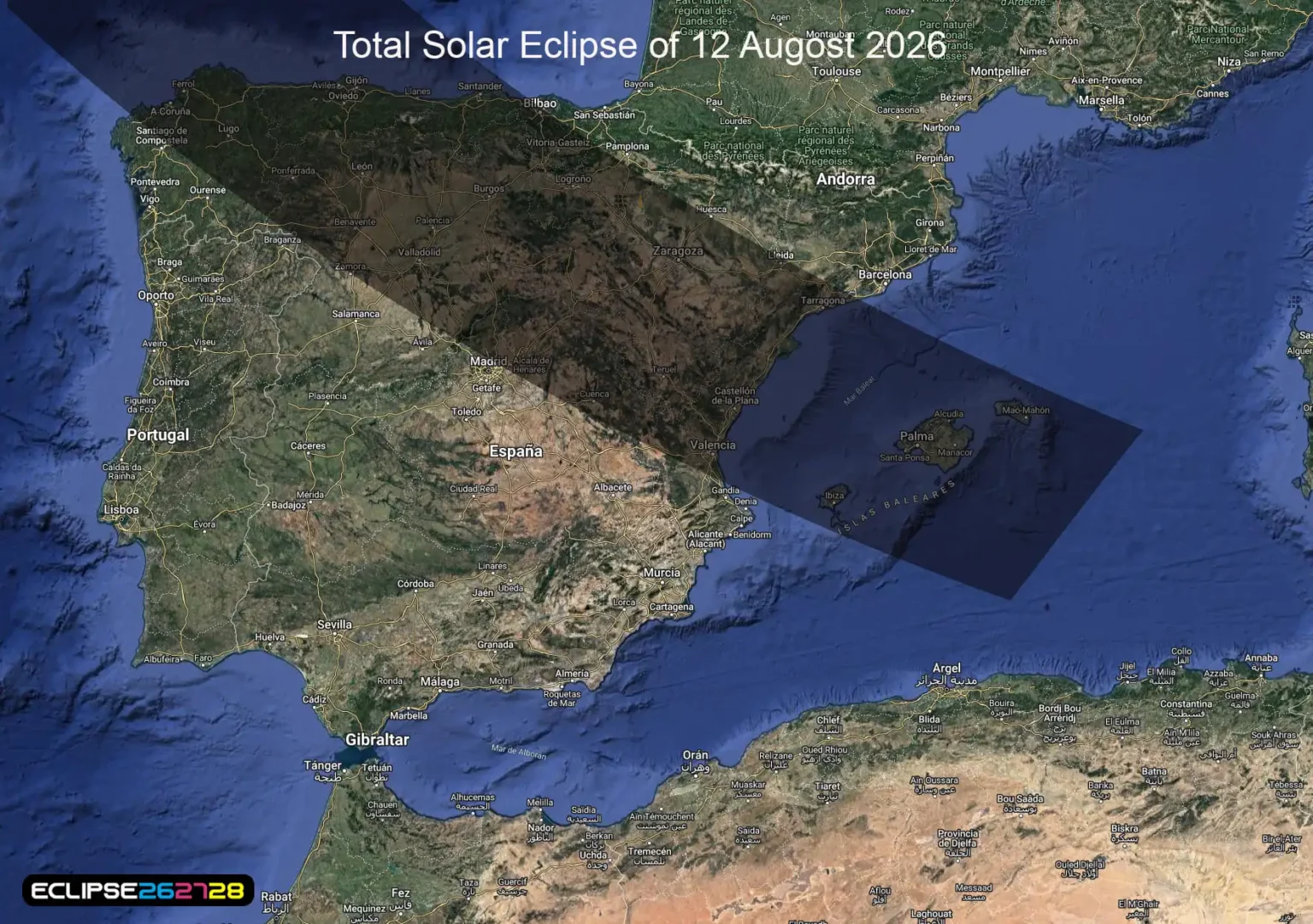
Table of Contents:
A rare celestial event is taking place on August 12, 2026, and skywatchers around the world are preparing to look toward the sky. The big question for many viewers is simple: what time is the solar eclipse on August 12?
The answer depends heavily on your location. The 2026 event is a total solar eclipse along a path crossing parts of Greenland, Iceland, northern Russia and Spain, while many other areas—including parts of the United States—will experience only a partial eclipse.
What Time Is the Solar Eclipse on August 12?

The worldwide eclipse begins at approximately 15:35 UTC, with the greatest eclipse occurring at about 17:47 UTC. Because the eclipse moves across a large geographic area, local viewing times are different from one location to another.
For viewers in the Eastern Time Zone, the greatest eclipse occurs at roughly 1:47 p.m. EDT. However, this does not mean every location in the eastern United States will see totality. Most U.S. viewers outside the path of totality will see a partial eclipse.
Solar Eclipse August 12, 2026: What Will Americans See?
For much of the United States, the event will be a partial solar eclipse, rather than the spectacular total eclipse visible in parts of the North Atlantic and Europe.
In New Jersey, for example, observers will see only a small partial eclipse during the afternoon. Local reporting indicates the eclipse will begin at about 1:05 p.m., peak around 1:45 p.m., and finish around 2:40 p.m. local time.
That means New Jersey viewers should not expect the sky to become completely dark. Instead, the Moon will cover a portion of the Sun.
Where Will the August 12 Eclipse Be Total?
The most dramatic views will occur along the eclipse’s narrow path of totality.
NASA identifies Greenland, Iceland and northern Spain, along with parts of northern Russia, as locations where observers can experience totality.
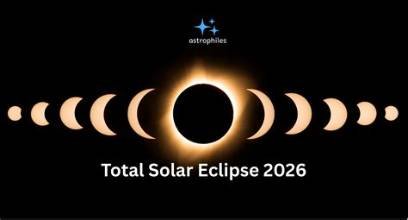
During totality, the Moon completely covers the bright disk of the Sun, allowing the Sun’s much fainter outer atmosphere—the corona—to become visible.
This is the positive side of the event: millions of people have an opportunity to witness a rare astronomical spectacle. But there is also a serious negative risk if people watch without proper eye protection.
Solar Eclipse Safety: Don’t Look Directly at the Sun:What Time Is the Solar Eclipse on August 12

A solar eclipse can be exciting, but ordinary sunglasses are not safe for viewing the Sun.
For a partial eclipse, viewers should use properly certified solar-viewing glasses or another approved solar-filter method. Looking directly at the Sun without suitable protection can cause serious eye injury.
Parents should also make sure children understand that cameras, binoculars and telescopes require appropriate solar filters. Simply putting eclipse glasses over an optical device is not a safe substitute for a properly designed solar filter.
Why August 12, 2026 Is Such an Important Sky Event
The August 12 eclipse is particularly exciting because the path of totality passes through several spectacular northern locations.
For travelers, Iceland, Greenland and northern Spain offer the chance to combine eclipse viewing with an unforgettable trip. For people elsewhere, the partial eclipse still provides an opportunity to observe the Moon passing across the Sun—provided proper eye protection is used.
NASA has also highlighted the August 12 eclipse among its major skywatching events for August 2026.
The Biggest Mistake Eclipse Viewers Should Avoid
The biggest mistake is assuming that everywhere experiences the eclipse at the same time.
The global eclipse begins and ends at different times as the Moon’s shadow moves across Earth. Your exact start, maximum and end times depend on your location.
So, if you’re searching “what time is the solar eclipse on August 12,” the best answer is to check an eclipse calculator for your exact city rather than relying on a single worldwide time.
Final Thoughts:
The August 12, 2026 solar eclipse promises to be a memorable astronomical event. While some locations will experience breathtaking totality, many places—including much of the United States—will see a partial eclipse.
The approximate worldwide schedule puts the greatest eclipse near 17:47 UTC, or about 1:47 p.m. EDT.
Whether you’re watching a partial eclipse from the United States or traveling to the path of totality, preparation is essential. Check your local timing, watch the weather forecast and, most importantly, protect your eyes with proper solar-viewing equipment.
The event may be beautiful—but viewing it carelessly can be dangerous .


Maria Bartiromo’s Stunning Exit Brings New Hope for Her Future

Cardinals vs Cubs:Major League Thrilling Clash Brings Joy Despite Tough Blow

What Time Is the Solar Eclipse on August 12? 1 Stunning Guide

New Movies Streaming – 6 Must-Watch New Movies & Shows Streaming This Weekend (July 18 – 20)

Hollie Strano’s Incredible Comeback: 1 New Radio Gig After WKYC Exit

911 outage – Pennsylvania experiencing problems with 911 calls statewide
-
 Entertainment1 year ago
New Movies Streaming – 6 Must-Watch New Movies & Shows Streaming This Weekend (July 18 – 20)
-
 News1 year ago
Hollie Strano’s Incredible Comeback: 1 New Radio Gig After WKYC Exit
-
 News1 year ago
911 outage – Pennsylvania experiencing problems with 911 calls statewide
-
 News1 year ago
Type 1 Diabetes Barbie Doll – A Step Toward Inclusivity in Toys
-

 Entertainment11 months ago
Donna Jean Godchaux – Heartbreaking Loss: Music Legend Dies at 78
-

 Sports1 year ago
Liverpool vs Athletic Club: Squad Update – Van Dijk, Bradley, Alisson, Gomez Ruled Out
-

 News1 year ago
NYC Subway Flood – Live Updates: NYC Subway Flood Disrupts Commute After Flash Flooding
-

 News1 year ago
Jannik Sinner and Carlos Alcaraz set for Wimbledon final showdown after semifinal wins