
Tech
4Chan – Hackers Leak 13,000 User Photos and IDs from Tea App on 4Chan – Women’s Safe Space Compromised


Table of Contents – 4Chan
Tea App Data Breach Exposes Women’s Private Data on 4Chan
In a shocking cybersecurity incident, hackers have breached the Tea app, a platform designed as a safe space for women to discuss men, leaking 13,000 verification photos and government IDs online. The breach, first reported by 404 Media, has led to the exposure of 72,000 images, with stolen data being shared on 4Chan and X (formerly Twitter).
The Tea app, which recently surged in popularity as the top free app on the Apple App Store, allows women to upload photos of men, leave reviews, and share safety warnings. The app requires users to submit selfies and IDs for verification, promising anonymity—a feature now compromised by the hack.

How Did the Tea App Hack Happen?
According to a Tea spokesperson, the hackers accessed a database from over two years ago, originally stored for law enforcement compliance related to cyberbullying prevention. The company has since hired third-party cybersecurity experts to secure its systems.
“Protecting our users’ privacy and data is our highest priority. Tea is taking every necessary step to ensure the security of our platform and prevent further exposure,” the spokesperson said.
However, the damage was already done. A 4Chan user posted a link Friday morning allowing people to download the stolen database, leading to a flood of victims’ photos and IDs being shared across the platform.
4Chan’s Role in the Tea App Leak
The hack appears to be part of a coordinated attack by online trolls. On Thursday evening, a thread on 4Chan called for a “hack and leak” campaign against the Tea app, with users expressing anger over the platform’s purpose.
By Friday, alleged victims’ identification photos were circulating on 4Chan and X, raising serious privacy concerns. NBC News has not verified the authenticity of the leaked images, but the breach has sparked fears of doxxing and cyberbullying.
Google Maps Tracking Tea Users?
Adding to the chaos, a Google Maps link was shared, purportedly showing locations of Tea users affected by the hack. While no names or addresses were included, the coordinates alone have heightened concerns over user safety and privacy.
Tea App’s Rise and Controversy
The Tea app, created by Sean Cook, was inspired by his mother’s “terrifying experience with online dating.” The app allows women to:
- Run background checks on men
- Search for criminal histories
- Reverse-search photos to prevent catfishing
The company also claims to donate 10% of profits to the National Domestic Violence Hotline, a claim verified by NBC News.
Despite its mission, the app has faced backlash from men who fear false accusations or doxxing. Some have even proposed creating a men-only version of Tea, such as “Teaborn”—an app that was removed from the App Store after its creator called out users for posting revenge porn.
User Reactions and Fallout
Following the breach, many users took to Tea’s Instagram page to express concerns:
- Some remain on the waitlist, unaware if their data was compromised
- Others are demanding answers about security measures
- Several are considering leaving the app due to privacy risks
Despite the hack, Tea’s signups have reportedly surpassed 2 million, showing continued interest—but the breach has undeniably shaken trust in the platform.
Conclusion: Will Tea Recover from the 4Chan Leak?
The Tea app hack highlights the dangers of online platforms storing sensitive data, especially those targeting vulnerable groups. With 4Chan users actively spreading stolen images, the situation underscores the risks of cyber warfare against women’s safe spaces.
As Tea works to rebuild security, the incident serves as a warning for other apps handling personal data—privacy breaches can happen overnight, and once data hits 4Chan, containment becomes nearly impossible.
For now, affected users are left wondering: Was their data leaked? And what happens next?
Entertainment
Slay the Spire 2’s Exciting Return Sparks 1 Big Hope—But Fans Also Fear Possible Delays


Table of Contents
Introduction: The Return of a Beloved Deck-Building Game:Slay the Spire 2
The gaming world is buzzing again as prepares to continue the legacy of one of the most influential deck-building roguelike games ever created. The sequel to , originally developed by , has already generated enormous excitement among players and critics.
While fans are thrilled about new gameplay features and improved mechanics, some are also cautious about development timelines and the pressure that comes with following such a successful original title. The anticipation surrounding the sequel highlights both the positive excitement and uncertain challenges facing the upcoming release.
What Made Slay the Spire a Gaming Phenomenon
When Slay the Spire launched, it quickly became a landmark in the roguelike genre. The game combined strategic card-based combat with procedurally generated dungeon runs, making every playthrough feel fresh and unpredictable.
Players climb a mysterious tower—called the Spire—while building powerful card decks, collecting relics, and defeating enemies in tactical turn-based battles.
Key features that made the original game popular include:
- Deep deck-building mechanics
- Randomized runs that create endless replayability
- Unique playable characters with different strategies
- Challenging but rewarding gameplay
Because of these elements, the game gained a massive following on platforms such as , , and , becoming a must-play title for strategy and indie game fans.
Slay the Spire 2: What We Know So Far

The announcement of Slay the Spire 2 brought fresh excitement to the gaming community. According to developers at Mega Crit, the sequel is being built with a new engine that allows for expanded mechanics and more complex gameplay systems.
Some expected improvements include:
New Characters and Deck Strategies
Players can expect entirely new heroes, each with unique card pools and abilities. This will introduce fresh strategies and different ways to approach each run.
Expanded Enemies and Boss Battles
The sequel promises a wider variety of enemies, along with more complex boss fights that require deeper tactical planning.
Updated Visuals and Animations
The developers are also working on enhanced art design and smoother animations, giving the sequel a more polished and modern look while maintaining the original game’s style.
Improved Mod Support
One of the strengths of the original game was its modding community. With Slay the Spire 2, developers are expected to support modding tools more directly, allowing players to create custom content.
Why Fans Are Excited About the Sequel
The success of Slay the Spire created a loyal fan base that has been waiting for years for a true sequel. Many gamers believe Slay the Spire 2 could push the roguelike deck-builder genre even further.
Fans are particularly excited about:
- New gameplay mechanics
- Deeper strategic choices
- Improved graphics and smoother gameplay
- Fresh characters and story elements
The original game is often cited as one of the best indie strategy games ever released, so expectations for the sequel are extremely high.
Concerns and Challenges Surrounding the Game

Despite the excitement, some players are also expressing cautious concerns. Creating a sequel to such a beloved game comes with significant pressure.
A few challenges include:
High Player Expectations
Fans expect the sequel to deliver innovation while preserving the core gameplay that made the original so successful.
Development Timeline
Game development can be unpredictable, and delays are common in the industry. Some players worry that a long development cycle could slow the momentum of excitement.
Competition in the Roguelike Genre
Since the original release, many new deck-building roguelike games have appeared. Slay the Spire 2 will need to stand out again in a now more competitive genre.
Still, the development team has a strong reputation for thoughtful design, which gives many fans confidence in the project.
The Future of Deck-Building Roguelike Games
If Slay the Spire 2 successfully expands the formula introduced by its predecessor, it could once again shape the direction of roguelike strategy games.
Many developers credit the original title with inspiring an entire wave of deck-building games. A successful sequel could push the genre forward with new mechanics and ideas that influence future releases.
For now, the gaming community is watching closely as more updates about the game’s development emerge.
Conclusion:Slay the Spire 2
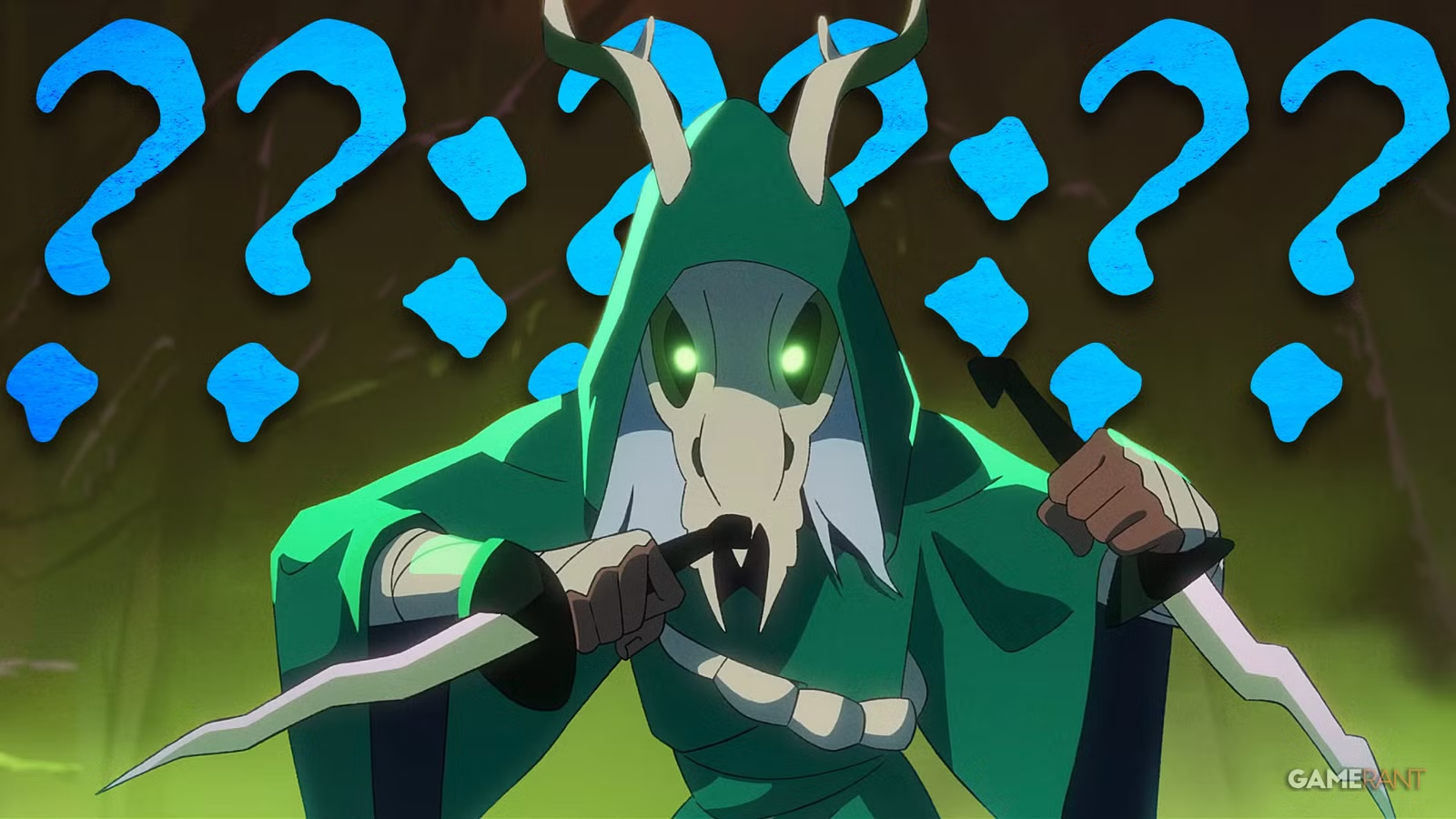
The announcement of Slay the Spire 2 has created a wave of excitement across the gaming world. With the promise of new characters, deeper strategy, and improved visuals, the sequel could become another milestone for indie gaming.
However, the pressure to live up to the legendary status of the first game means the developers must balance innovation with the core experience fans love.
Whether it becomes the next great roguelike classic or faces the challenges of high expectations, one thing is certain: the journey back up the Spire is one many gamers are eager to begin.

Table of Contents
Why Is Crypto Crashing? – Stunning 30% Bitcoin Plunge Erases Trump-Era Gains
Bitcoin’s Brutal Nosedive: A $127K High to a Crisis of Confidence
If you’ve checked your crypto portfolio lately (Why Is Crypto Crashing?), you might need a strong coffee. American investors are waking up to a harsh reality as Bitcoin, the flagship cryptocurrency, continues its steep slide, wiping out all the gains made since President Trump’s re-election rally.

From Boom to Gloom: The Numbers Tell the Story
As of this morning, Bitcoin is trading around $70,900, a far cry from its dizzying all-time high of over $127,000 hit in October 2025. Since the start of 2026 alone, the digital asset has shed nearly 20% of its value. This plunge marks a dramatic reversal from the explosive gains seen after Trump’s victory, which had sparked hopes of a crypto-friendly regulatory era in Washington.

The Trump Factor: Promises vs. Political Gridlock
The current crash is deeply tied to the political landscape. The rally was fueled by Trump’s campaign pledge to make the U.S. the “cryptocurrency capital” of the world and the subsequent launch of his venture, World Liberty Financial. Momentum built with the announcement of a U.S. strategic crypto reserve.
However, the optimism has crashed into political walls. A key Trump-backed crypto bill has stalled in the U.S. Senate, deadlocked by disagreements between traditional banks and crypto firms. This regulatory uncertainty is a primary driver behind the current sell-off, leaving investors asking, “Why is crypto crashing?“

The doubts intensified this week when Democratic Rep. Ro Khanna announced an investigation into World Liberty Financial following a Wall Street Journal report about a major Abu Dhabi investment. This scrutiny adds another layer of uncertainty, shaking the confidence of the market.
A Wider Market Tremor
Bitcoin isn’t suffering alone. The fear has spread across asset classes. On Thursday, silver prices plummeted as much as 16%, while major Asian stock indexes in Hong Kong and Japan also fell. This correlation suggests a broader risk-averse mood among investors globally.

Why Is Crypto Crashing? The American Investor’s Perspective
For everyday Americans who jumped into crypto, the crash isn’t just about charts—it’s about trust and timeline. The core issues are:
- Stalled Regulation: The promised clear rules from Washington have not materialized. This “light touch” regulatory environment is on ice, leaving the industry in a frustrating limbo.
- Political Scrutiny: Investigations into high-profile projects like Trump’s create fear of a renewed regulatory crackdown, spooking both institutional and retail investors.
- Profit-Taking & Fear: After the incredible run to $127K, a correction was inevitable. The current political headlines are triggering widespread profit-taking and panic selling.

What’s Next?
The market is at a critical juncture. The trajectory for Bitcoin and other cryptocurrencies now heavily depends on political developments in Washington. Can the stalled bill find compromise? Will investigations conclude without major shocks? The answers will determine if this is a painful correction or the start of a prolonged “crypto winter.”
For now, American investors are advised to buckle up, review their risk tolerance, and remember the oldest rule in the book: never invest more than you can afford to lose.

Table of Contents – Is ChatGPT Down Again?
ChatGPT Outage Sparks User Frustration, Swift OpenAI Fix
If you were among the thousands trying to ask ChatGPT (Is ChatGPT Down Again?) a question on Tuesday afternoon only to be met with error messages, you weren’t alone. A significant, though brief, outage hit the popular AI chatbot, affecting users across the United States and sparking a wave of reports on problem-tracking sites.

The issue, which has since been resolved, was confirmed by both user-submitted data and OpenAI, the maker of ChatGPT. According to Downdetector.com, a site that aggregates outage reports, problems spiked dramatically. At its peak, over 13,000 users reported issues accessing or using the chatbot. For many Americans who have integrated ChatGPT into their daily workflow for tasks like drafting emails, debugging code, or brainstorming ideas, the sudden silence was a jarring interruption.

The timeline, as tracked by Downdetector, showed a rapid surge and decline. By 4:33 p.m. Eastern Time, the number of active problem reports had plummeted to just 309, indicating a widespread recovery. It’s important to note that Downdetector’s data is based on user submissions, so the actual number of affected individuals could be higher or lower. Nevertheless, it serves as a reliable real-time barometer for service health.
OpenAI was quick to acknowledge and address the problem. The company stated, “We have identified the issue, applied the necessary mitigations and are monitoring the recovery.” This transparent communication is crucial for maintaining trust with its massive user base, especially as AI tools become more deeply embedded in professional and personal contexts.
So, what does this mean for you, the user? These occasional hiccups highlight our growing reliance on cloud-based AI services. While frustrating, brief outages are often the growing pains of incredibly complex systems being pushed to their limits by unprecedented demand. For those wondering “is chatgpt down” during future glitches, the best course of action is to check official channels like the OpenAI Status Page or community-driven sites like Downdetector before assuming the problem is on your end.
The swift resolution of this outage demonstrates OpenAI’s operational responsiveness. However, it also serves as a reminder that even the most advanced AI systems are not infallible. As we barrel forward into an AI-augmented future, users and companies alike are learning to build in redundancies and patience. For now, the digital assistant is back online, ready to tackle your prompts once more.


Mizzou Basketball:Resilient Yet Risky Rise: Mizzou Basketball Shows Power, Promise, and Pressure

Celtics vs Grizzlies:Explosive Clash With Hope and Frustration: Celtics vs Grizzlies Show Power and Pain

Chelsea vs Newcastle: High-Stakes Clash Brings Hope, Pressure, and Premier League Drama

New Movies Streaming – 6 Must-Watch New Movies & Shows Streaming This Weekend (July 18 – 20)

Hollie Strano’s Incredible Comeback: 1 New Radio Gig After WKYC Exit

911 outage – Pennsylvania experiencing problems with 911 calls statewide
-
 Entertainment8 months ago
New Movies Streaming – 6 Must-Watch New Movies & Shows Streaming This Weekend (July 18 – 20)
-
 News7 months ago
Hollie Strano’s Incredible Comeback: 1 New Radio Gig After WKYC Exit
-
 News8 months ago
911 outage – Pennsylvania experiencing problems with 911 calls statewide
-
 News8 months ago
Type 1 Diabetes Barbie Doll – A Step Toward Inclusivity in Toys
-

 Sports8 months ago
Liverpool vs Athletic Club: Squad Update – Van Dijk, Bradley, Alisson, Gomez Ruled Out
-

 Fashion8 months ago
Rosie O’Donnell – Trump Threatens to Revoke Rosie O’Donnell’s U.S. Citizenship in Latest Feud Escalation
-

 News8 months ago
NYC Subway Flood – Live Updates: NYC Subway Flood Disrupts Commute After Flash Flooding
-

 News8 months ago
Jannik Sinner and Carlos Alcaraz set for Wimbledon final showdown after semifinal wins