
News
Hongqi Bridge Collapse: Shocking Footage of 758-Meter Structure’s Failure

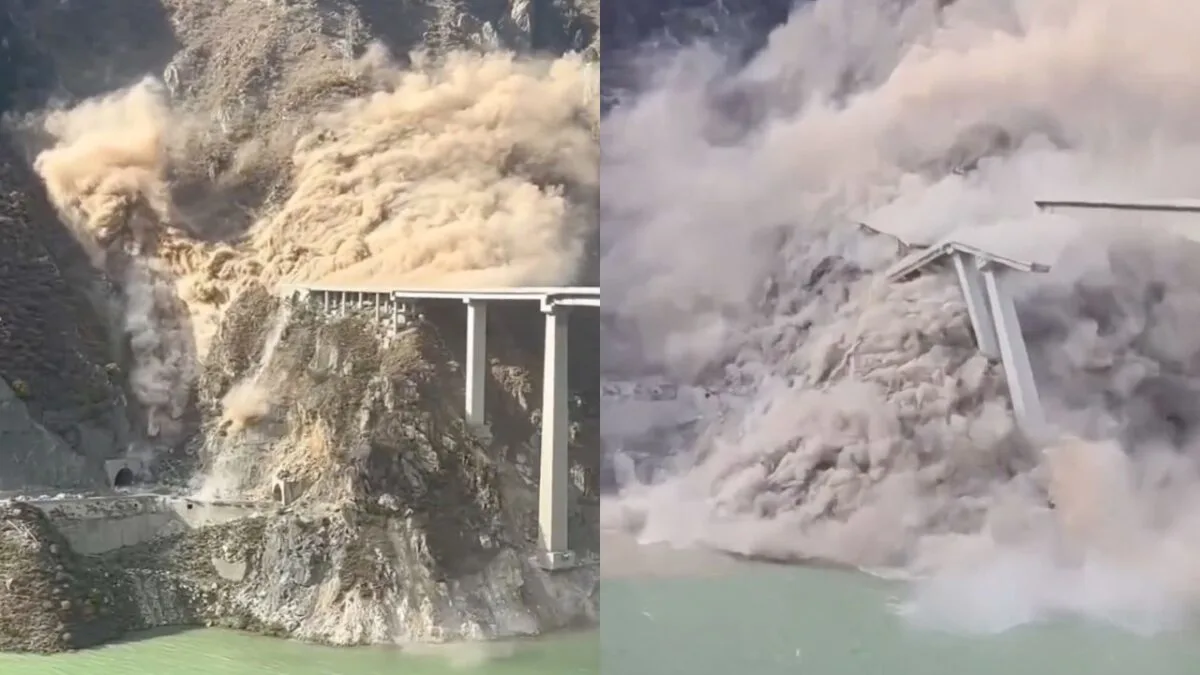
Table of Contents
Shocking Collapse: China’s 758-Meter Hongqi Bridge Fails
In a startling infrastructure failure, a significant portion of the newly constructed Hongqi Bridge in China’s Sichuan province collapsed on Tuesday, plunging into the river below just months after its high-profile opening. The incident, captured in dramatic viral videos, has raised serious questions about the stability of major construction projects in geologically unstable regions.

The collapse occurred after heavy landslides struck the surrounding mountainside, according to authorities in Maerkang city. The 758-meter bridge, a crucial part of a national highway designed to link China’s interior with the Tibetan Plateau, gave way under the force of the shifting earth.
Viral Footage Captures the Moment of Disaster
Videos that spread rapidly across social media platforms show the terrifying moment of the collapse. The footage depicts a massive section of the roadway suddenly crumbling, sending a huge plume of dust and debris billowing upwards before the structure crashes hundreds of meters down into the river. Other circulating images show the aftermath, with large segments of the bridge completely missing and the remaining roadway dangling precariously over the gorge.

Warning Signs and a Narrow Escape
Fortunately, the disaster did not result in any casualties. This appears to be due to proactive safety measures taken by local police. Authorities had already closed the Hongqi Bridge to all traffic on Monday afternoon, a full day before the collapse. The decision was made after inspectors identified alarming warning signs, including visible cracks on nearby slopes and significant ground shifts, signaling potential instability.
By Tuesday afternoon, the situation deteriorated rapidly. The local government released a statement confirming that worsening conditions on the mountainside triggered the landslides, which ultimately led to the collapse of the approach bridge and the roadbed.
A Symbol of Progress Meets a Sudden End
The Hongqi Bridge was intended to be a landmark achievement. Completed earlier this year and built by the prominent Sichuan Road & Bridge Group, it was celebrated as a vital infrastructure milestone. Its purpose was to strengthen economic and transport connections between Sichuan and the remote Tibetan Plateau. Promotional material from the contractor had showcased the bridge’s opening as a testament to modern Chinese engineering.

Now, the focus has sharply shifted from celebration to investigation. Authorities have confirmed that a full investigation into the precise cause of the structural failure is underway. Engineers and geologists will likely examine whether the landslide was the sole cause or if other factors related to the bridge’s design or construction in the challenging mountainous terrain contributed to the collapse.
The incident serves as a stark reminder of the immense challenges involved in building massive infrastructure projects in areas prone to natural disasters like landslides and earthquakes. For now, the shattered remains of the Hongqi Bridge stand as a symbol of a fractured link and a project that ended in catastrophic failure.


Table of Contents:
A rare celestial event is taking place on August 12, 2026, and skywatchers around the world are preparing to look toward the sky. The big question for many viewers is simple: what time is the solar eclipse on August 12?
The answer depends heavily on your location. The 2026 event is a total solar eclipse along a path crossing parts of Greenland, Iceland, northern Russia and Spain, while many other areas—including parts of the United States—will experience only a partial eclipse.
What Time Is the Solar Eclipse on August 12?

The worldwide eclipse begins at approximately 15:35 UTC, with the greatest eclipse occurring at about 17:47 UTC. Because the eclipse moves across a large geographic area, local viewing times are different from one location to another.
For viewers in the Eastern Time Zone, the greatest eclipse occurs at roughly 1:47 p.m. EDT. However, this does not mean every location in the eastern United States will see totality. Most U.S. viewers outside the path of totality will see a partial eclipse.
Solar Eclipse August 12, 2026: What Will Americans See?
For much of the United States, the event will be a partial solar eclipse, rather than the spectacular total eclipse visible in parts of the North Atlantic and Europe.
In New Jersey, for example, observers will see only a small partial eclipse during the afternoon. Local reporting indicates the eclipse will begin at about 1:05 p.m., peak around 1:45 p.m., and finish around 2:40 p.m. local time.
That means New Jersey viewers should not expect the sky to become completely dark. Instead, the Moon will cover a portion of the Sun.
Where Will the August 12 Eclipse Be Total?
The most dramatic views will occur along the eclipse’s narrow path of totality.
NASA identifies Greenland, Iceland and northern Spain, along with parts of northern Russia, as locations where observers can experience totality.
During totality, the Moon completely covers the bright disk of the Sun, allowing the Sun’s much fainter outer atmosphere—the corona—to become visible.
This is the positive side of the event: millions of people have an opportunity to witness a rare astronomical spectacle. But there is also a serious negative risk if people watch without proper eye protection.
Solar Eclipse Safety: Don’t Look Directly at the Sun:What Time Is the Solar Eclipse on August 12

A solar eclipse can be exciting, but ordinary sunglasses are not safe for viewing the Sun.
For a partial eclipse, viewers should use properly certified solar-viewing glasses or another approved solar-filter method. Looking directly at the Sun without suitable protection can cause serious eye injury.
Parents should also make sure children understand that cameras, binoculars and telescopes require appropriate solar filters. Simply putting eclipse glasses over an optical device is not a safe substitute for a properly designed solar filter.
Why August 12, 2026 Is Such an Important Sky Event
The August 12 eclipse is particularly exciting because the path of totality passes through several spectacular northern locations.
For travelers, Iceland, Greenland and northern Spain offer the chance to combine eclipse viewing with an unforgettable trip. For people elsewhere, the partial eclipse still provides an opportunity to observe the Moon passing across the Sun—provided proper eye protection is used.
NASA has also highlighted the August 12 eclipse among its major skywatching events for August 2026.
The Biggest Mistake Eclipse Viewers Should Avoid
The biggest mistake is assuming that everywhere experiences the eclipse at the same time.
The global eclipse begins and ends at different times as the Moon’s shadow moves across Earth. Your exact start, maximum and end times depend on your location.
So, if you’re searching “what time is the solar eclipse on August 12,” the best answer is to check an eclipse calculator for your exact city rather than relying on a single worldwide time.
Final Thoughts:

The August 12, 2026 solar eclipse promises to be a memorable astronomical event. While some locations will experience breathtaking totality, many places—including much of the United States—will see a partial eclipse.
The approximate worldwide schedule puts the greatest eclipse near 17:47 UTC, or about 1:47 p.m. EDT.
Whether you’re watching a partial eclipse from the United States or traveling to the path of totality, preparation is essential. Check your local timing, watch the weather forecast and, most importantly, protect your eyes with proper solar-viewing equipment.
The event may be beautiful—but viewing it carelessly can be dangerous .

Table of Contents:
Shamell Naquan Joyner Jury Evidence: Shocking Trial Twist :

Shamell Naquan Joyner Jury Evidence: Jury’s Unexpected Discovery Raises Questions
A dramatic turn unfolded in the federal trial of Shamell Naquan Joyner after jurors reportedly discovered items hidden inside evidence that had not been identified by investigators, prosecutors, or the defense before deliberations began. The unexpected finding sparked debate about evidence handling while also highlighting the jury’s careful review of the case. (The Daily Beast)
Although the discovery surprised everyone in the courtroom, the judge instructed jurors not to consider the newly found items as evidence because they had not been formally introduced during the trial. (The Daily Beast)
What Happened During Jury Deliberations?
According to court proceedings, jurors examining clothing that had been admitted into evidence found a Chinese yuan banknote and a small amount of white powder inside pockets that had apparently gone unnoticed throughout the investigation and trial. (The Daily Beast)
The discovery immediately paused deliberations, prompting U.S. District Judge Rudolph Contreras to question each juror individually to ensure they could remain impartial and disregard the newly discovered items. The judge emphasized that these materials were not part of the official evidence presented at trial. (The Daily Beast)
Charges Against Shamell Naquan Joyner

Federal prosecutors accused Shamell Naquan Joyner of multiple serious offenses connected to a series of robberies and carjackings that allegedly occurred in Washington, D.C., Maryland, and Virginia during 2023.
The superseding indictment included charges such as:
- Hobbs Act robbery
- Armed carjacking
- Interstate transportation of stolen vehicles
- Brandishing and discharging a firearm during violent crimes
- Possession of a firearm by a convicted felon
These charges formed part of a 28-count federal indictment. (Department of Justice)
Judge Responds to Evidence Oversight
Judge Rudolph Contreras openly expressed surprise that the hidden items had not been discovered during the investigation.
Despite the unusual circumstances, each juror confirmed they could ignore the newly found materials and continue deliberating solely on the evidence properly admitted during trial. (The Daily Beast)
Legal experts noted that while evidence oversights are uncommon, judges have procedures available to prevent such discoveries from unfairly influencing a verdict.
Jury Verdict
After resuming deliberations, the jury reached a mixed verdict.
According to court reports:
- The jury convicted Joyner on 13 of the 28 federal charges.
- Jurors were unable to reach unanimous decisions on the remaining 15 counts, resulting in a partial deadlock.
- The convictions carry a lengthy mandatory minimum prison sentence under federal law. (The Daily Beast)
The split verdict illustrates that jurors carefully evaluated each charge independently rather than issuing an all-or-nothing decision.
Why the Discovery Matters
The incident has generated significant discussion among legal professionals because the overlooked items remained inside evidence throughout the investigation, pretrial review, and courtroom proceedings.
The case highlights several important issues:
- Proper evidence handling
- Chain-of-custody procedures
- Jury responsibility
- Judicial safeguards protecting fair trials
Although the discovery created headlines, the judge’s instructions were designed to ensure that the verdict rested only on legally admitted evidence. (The Daily Beast)
Broader Impact on the Justice System
Cases involving unexpected courtroom developments often lead to renewed discussions about investigative procedures and evidence management.
Legal observers say this trial demonstrates two important realities:
- Careful jurors can identify issues that others may overlook.
- Courts have safeguards intended to preserve fairness even when unexpected events occur.
Whether additional legal motions or appeals follow remains to be seen.
Official Resources
- U.S. Department of Justice – U.S. Attorney’s Office for the District of Columbia
- Federal Court Opinion (United States v. Joyner)
Conclusion:
The Shamell Naquan Joyner jury evidence case has drawn national attention because of an extraordinary courtroom moment in which jurors uncovered items that had escaped notice throughout the investigation. While the discovery exposed shortcomings in evidence handling, the court took immediate steps to protect the integrity of the trial. The resulting mixed verdict underscores the importance of impartial juries, judicial oversight, and strict adherence to courtroom procedures in the American justice system.

Table of Contents
2027 Could Become a Defining Year for the Future

The year is already attracting attention as governments, businesses, technology companies and entertainment industries prepare for major developments. From artificial intelligence and digital transformation to international sports and changing consumer habits, the year could bring exciting opportunities while also creating serious challenges.
Some developments are already scheduled. The FIFA Women’s World Cup will take place in Brazil, while the Cricket World Cup is scheduled across South Africa, Zimbabwe and Namibia. The first Olympic Esports Games are also planned for Riyadh.
For consumers and businesses, however, the biggest story may be technological change.
Artificial Intelligence Could Dominate 2027
Artificial intelligence is expected to play an even larger role in everyday life by 2027. Businesses are increasingly using AI for research, customer service, marketing, software development and content creation.
The potential benefits are significant. AI could help companies become more productive, assist doctors with complex tasks and provide consumers with increasingly personalized digital services.
But there is also a darker side. Concerns about misinformation, cybersecurity, privacy and job disruption are likely to remain major issues. The challenge will be finding a balance between innovation and responsible use.
2027 Could Be a Major Year for Entertainment

The global entertainment industry is expected to continue its shift toward digital platforms, streaming, gaming and advertising.
PwC previously projected that global entertainment and media revenue could reach approximately $2.8 trillion, with digital sources accounting for nearly three-quarters of industry revenue. Gaming was identified as one of the industry’s major growth engines.
That creates a positive outlook for filmmakers, musicians, game developers and digital creators. At the same time, intense competition could make it harder for individual streaming services and entertainment companies to maintain profitability.
Major Sports Events Will Bring Global Attention
Sports will be another important part of the calendar.
The 2027 FIFA Women’s World Cup in Brazil is expected to generate substantial international interest. Women’s professional soccer is also continuing to grow in the United States, with the NWSL positioning its 2027 season around the broader international soccer calendar.
Cricket fans will also have a major event to follow, with the Cricket World Cup scheduled to be hosted by South Africa, Zimbabwe and Namibia.
These events could provide positive economic opportunities for host countries, tourism businesses and broadcasters, although large sporting events can also face challenges involving costs, infrastructure and logistics.
Technology Companies Prepare for a New Era
Technology exhibitions are already looking forward to it. CES for example, is scheduled for January 6–9 in Las Vegas, highlighting how artificial intelligence, connected devices and other emerging technologies will remain central to the technology industry.
Businesses are expected to focus heavily on:
Artificial intelligence
Robotics
Cloud computing
Cybersecurity
Connected devices
Electric vehicles
Renewable energy
Advanced digital services
The positive possibility is faster innovation. The negative concern is that companies and workers that fail to adapt could find themselves increasingly behind their competitors.
The Global Economy Faces Opportunities and Risks
The economic picture for 2027 is difficult to predict with certainty.
Technology investment could support productivity and create new industries. However, inflation, interest rates, geopolitical tensions and changes in consumer spending could create uncertainty.
Businesses are therefore likely to prioritize efficiency and flexibility. Companies capable of adopting new technology without losing sight of customer needs could have an advantage.
Climate and Renewable Energy Remain Important
Climate change will remain a major concern in 2027.
Governments and businesses are expected to continue investing in renewable energy, electric transportation and more efficient infrastructure. These developments could create new industries and jobs while reducing dependence on fossil fuels.
However, extreme weather, rising infrastructure costs and disagreements over environmental policies could create significant obstacles.
Positive Outlook: Innovation Creates New Opportunities
There are plenty of reasons to be optimistic about 2027.
Technology could make healthcare more efficient, businesses could become more productive, and consumers could gain access to better digital products. International sporting and entertainment events could also create tourism and economic opportunities.
For workers, learning new digital skills may open doors to emerging careers in AI, cybersecurity, healthcare technology, renewable energy and advanced manufacturing.
Negative Outlook: Rapid Change Could Create New Problems
The future will not be completely positive:
Rapid technological development could increase concerns about employment, misinformation and privacy. Global political tensions could also affect trade and financial markets.
The growing amount of AI-generated content may make it more difficult for people to distinguish authentic information from misleading material. Cybersecurity could become an even bigger priority as more services move online.
What Could Make 2027 Different?
One of the biggest themes of 2027 may be adaptation.
People who learn to work effectively with new technologies could benefit from emerging opportunities. Companies that embrace innovation responsibly may gain an advantage, while organizations that resist change could struggle.
The same principle could apply to governments, which will need to balance technological progress with privacy, security, employment and public trust.
Final Outlook for 2027
2027 has the potential to be an exciting but complicated year. Major sporting competitions, technological advances and continued growth in digital entertainment could create a powerful sense of optimism.
At the same time, economic uncertainty, geopolitical tensions, climate concerns and rapid technological disruption could produce difficult challenges.
The most important story may therefore not be what happens in 2027, but how successfully people, businesses and governments adapt to it.
Useful Links
United Nations — Global issues and international developments.
International Monetary Fund — Global economic research and outlooks.
World Economic Forum — Technology, business and global trends.
PwC Global Entertainment & Media Outlook — Entertainment and media industry forecasts.


What Time Is the Solar Eclipse on August 12? 1 Stunning Guide

Shamell Naquan Joyner Jury Evidence: Shocking Discovery Brings Hope and Embarrassment

2027: 7 Powerful Wins, Risks and Changes Shaping the Future!

New Movies Streaming – 6 Must-Watch New Movies & Shows Streaming This Weekend (July 18 – 20)

Hollie Strano’s Incredible Comeback: 1 New Radio Gig After WKYC Exit

911 outage – Pennsylvania experiencing problems with 911 calls statewide
-
 Entertainment1 year ago
New Movies Streaming – 6 Must-Watch New Movies & Shows Streaming This Weekend (July 18 – 20)
-
 News12 months ago
Hollie Strano’s Incredible Comeback: 1 New Radio Gig After WKYC Exit
-
 News1 year ago
911 outage – Pennsylvania experiencing problems with 911 calls statewide
-
 News1 year ago
Type 1 Diabetes Barbie Doll – A Step Toward Inclusivity in Toys
-

 Entertainment9 months ago
Donna Jean Godchaux – Heartbreaking Loss: Music Legend Dies at 78
-

 Sports1 year ago
Liverpool vs Athletic Club: Squad Update – Van Dijk, Bradley, Alisson, Gomez Ruled Out
-

 News1 year ago
NYC Subway Flood – Live Updates: NYC Subway Flood Disrupts Commute After Flash Flooding
-

 News1 year ago
Jannik Sinner and Carlos Alcaraz set for Wimbledon final showdown after semifinal wins