
Business
Dow Jones Stocks Market Defies Gloom, Rises 37 Points Amid Uncertainty


Table of Contents
A Mixed Day on Wall Street: Dow Edges Higher as Nasdaq Pulls Back From Record High
The U.S. stock market presented a tale of two exchanges on Tuesday, offering a nuanced picture for the Dow Jones stocks market. While the tech-heavy Nasdaq Composite stepped back from its recent record high, the Dow Jones Industrial Average managed a modest gain, showcasing a market grappling with mixed economic signals.

🚨 Market Check: Dow gains 37 points but Nasdaq slips from its peak. Why the split?
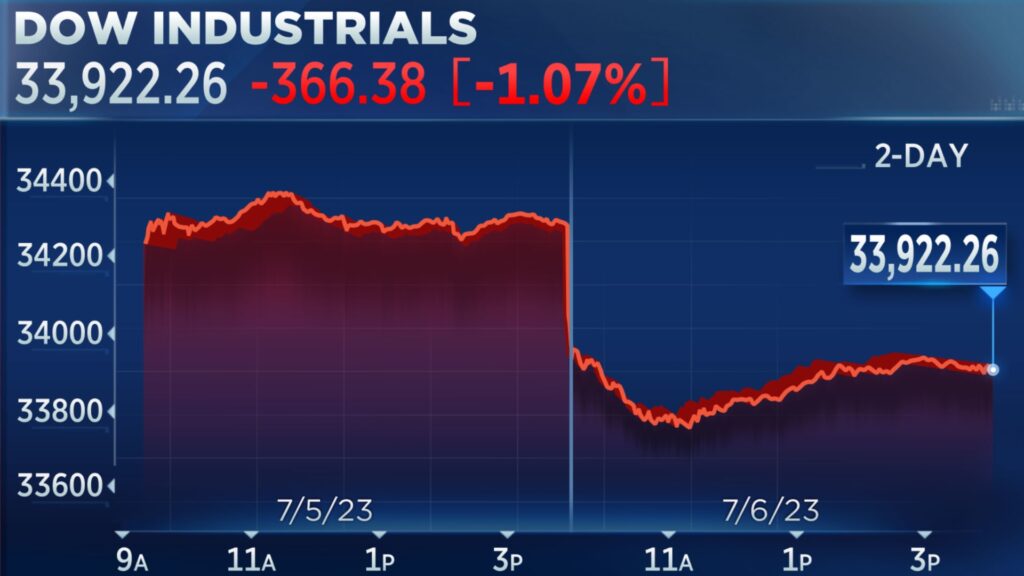
The session was largely muted. The broad S&P 500 hovered around the flatline, ultimately closing virtually unchanged. Similarly, the Nasdaq, a day after clinching an all-time high, also treaded water. In a contrasting move, the Dow Jones stocks market demonstrated resilience, adding 37 points, or 0.1%, bucking the trend of stagnation.

The underlying mood, however, was one of caution. Investor confidence was tested after a significant revision to employment data from the Bureau of Labor Statistics. The report revealed that the U.S. economy created 911,000 fewer jobs in the 12 months through March than initially reported. This wasn’t just a minor adjustment; it was the largest downward revision since 2002, landing at the high end of what Wall Street analysts had feared.
While these figures are historical (covering up to six months ago), their impact is forward-looking. This substantial downgrade fuels concerns that the economy’s engine may be cooling off more rapidly than previously anticipated. For investors, this creates a complex puzzle: a weaker labor market could encourage the Federal Reserve to act more aggressively with interest rate cuts later this year, which is typically a positive catalyst for stocks. However, it also raises the alarming specter of a sharper economic slowdown.
“The jobs picture keeps deteriorating and while that should make it easier for the Fed to cut rates this fall, it could also throw some cold water on the recent rally,” noted Chris Zaccarelli, chief investment officer at Independent Advisor Alliance.
This cautious stance follows a powerful rally, largely driven by mega-cap technology and chipmaking stocks like Nvidia (NVDA) and Broadcom (AVGO), which propelled the Nasdaq to its record. On Tuesday, Broadcom shares took a breather, dipping 2% after a strong two-day advance, though it remains up significantly for the week.

All eyes are now fixed on the next major economic data releases that could dictate the Fed’s moves at its upcoming policy meeting. The August Producer Price Index (PPI) report is due Wednesday morning, followed closely by the crucial Consumer Price Index (CPI) on Thursday. Last week’s weaker-than-expected jobs report bolstered hopes for a dovish Fed pivot, but unexpectedly hot inflation numbers could completely derail that optimistic outlook.
The stakes are incredibly high. “If the CPI shows a worsening trend of higher inflation on Thursday then the market will begin worrying about stagflation,” warned Zaccarelli. “The bull market has been extremely resilient this year, but we could be approaching an inflection point where it is tested again.”
In summary, the Dow Jones stocks market‘s slight gain offered a pocket of positivity on a day dominated by uncertainty. The market’s next major move hinges almost entirely on the incoming inflation data, which will either validate hopes for rate cuts or reintroduce fears of a prolonged period of economic stagnation and persistent inflation.












Threats against Federal Judges – 6 Vicious Threats Forced Federal Judges Into Hiding
Table of Contents
Shocking Truths Behind the Crisis Facing American Courts Today
The American judicial system is facing an unprecedented security emergency. (Threats against Federal Judges Forced Federal Judges) Following high-profile legal decisions, federal jurists across the country are experiencing a terrifying wave of personal intimidation, harassment, and targeted violence. U.S. District Judge John McConnell recently stepped forward to detail the alarming reality of what happens when the courtroom battle spills directly onto judges’ doorsteps.

For comprehensive coverage on judicial safety policies, you can review updates directly via The Washington Post or monitor official updates from the U.S. Courts Website regarding institutional protections.
The Ruling That Triggered a Dangerous Backlash
The crisis intensified dramatically after McConnell, an Obama-appointed federal judge based in Rhode Island, issued a temporary block against the Trump administration’s sweeping federal funding freeze. While legal disagreements are a standard pillar of American jurisprudence, this ruling unleashed an unprecedented torrent of hostility.

According to reports verified by the U.S. Marshals Service, McConnell faced at least six highly credible death threats shortly after the decision came down. Judicial officials note that security incidents targeting federal judges nationwide have surged dramatically over recent fiscal years, pointing to a systemic breakdown in civil discourse. Additional context regarding federal oversight and safety legislation can be tracked via resources on Reuters.
A Chilling Form of Intimidation: The “Pizza Doxxing” Phenomenon
While hundreds of abusive phone calls and hostile emails flooded the Rhode Island federal courthouse—including explicit assassination wishes left on voicemail—one specific incident crossed a terrifying psychological line.

An unsolicited pizza delivery arrived at McConnell’s private residence. Upon inspecting the order details, McConnell discovered it had been placed under the name Daniel Anderl.
For the American legal community, that name carries profound trauma. Daniel Anderl was the 20-year-old son of New Jersey federal judge Esther Salas. In July 2020, a gunman posing as a delivery driver targeted Judge Salas’s home, fatally shooting her son. Using Daniel’s name for a delivery to another sitting judge’s home was quickly recognized by authorities as a calculated psychological warning—a practice federal prosecutors have designated as “pizza doxxing”.
“I don’t think anything disturbed me as much as that did,” McConnell expressed, highlighting how modern harassment seeks to weaponize past tragedies against judicial families.
When Harassment Targets the Family
The intimidation tactics did not stop at professional disagreement or anonymous mail. Members of McConnell’s immediate family were dragged directly into the political crossfire.

Federal authorities warned McConnell that specific death threats had been made against his wife. Furthermore, his daughter became a target after far-right activist Laura Loomer published critical commentary regarding McConnell’s funding freeze ruling on social media. The post explicitly featured a photograph of McConnell’s daughter alongside her personal identifying information.
The exposure amplified exponentially when high-profile public figures, including Elon Musk, reshared the post to millions of followers on X. Reflecting on the escalation, McConnell shared a deeply personal sentiment:
- Professional Tolerance: “I signed up for whatever, I’ll take the lumps.”
- Family Impact: When the backlash reached his daughter, it felt as though “someone put a dagger through my heart.”
Supreme Court Justices Demand Urgent Action
The terrifying experiences of district judges like McConnell are mirrored at the highest levels of American law. Supreme Court Justices Elena Kagan and Amy Coney Barrett have appeared before Congress to lobby for millions of dollars in emergency security funding.
Justice Barrett faced intense public scrutiny and personal criticism following high-profile rulings on controversial topics such as tariff policies and birthright citizenship. During congressional oversight hearings, Justice Kagan openly denounced the rising tide of aggressive rhetoric, labeling current attacks against members of the judiciary as profoundly “dangerous”.
The White House Response and the Debate Over Free Speech
As federal judges sound the alarm, political leaders face mounting pressure to draw a clear line between robust public criticism and stochastic harassment.
The White House strongly rejected claims that political rhetoric from administration officials directly invites violence against judges. White House spokesperson Abigail Jackson dismissed such arguments as “deeply unserious,” asserting that the administration remains fully committed to protecting every member of the judicial branch.
Despite these assurances, legal experts and nonpartisan organizations argue that the line between political opposition and dangerous intimidation continues to blur, threatening the core independence of the American legal framework.

Table of Contents – Terry Crews
Rebecca King Crews Beats Tremors After Breakthrough Procedure – “I Can Write My Name Again”
USA PEOPLE – For nearly a decade, Rebecca King Crews – wife of Hollywood star Terry Crews – struggled with a mystery. Doctors kept telling her the shaking hands and numb foot were just anxiety. But she knew something was deeply wrong.
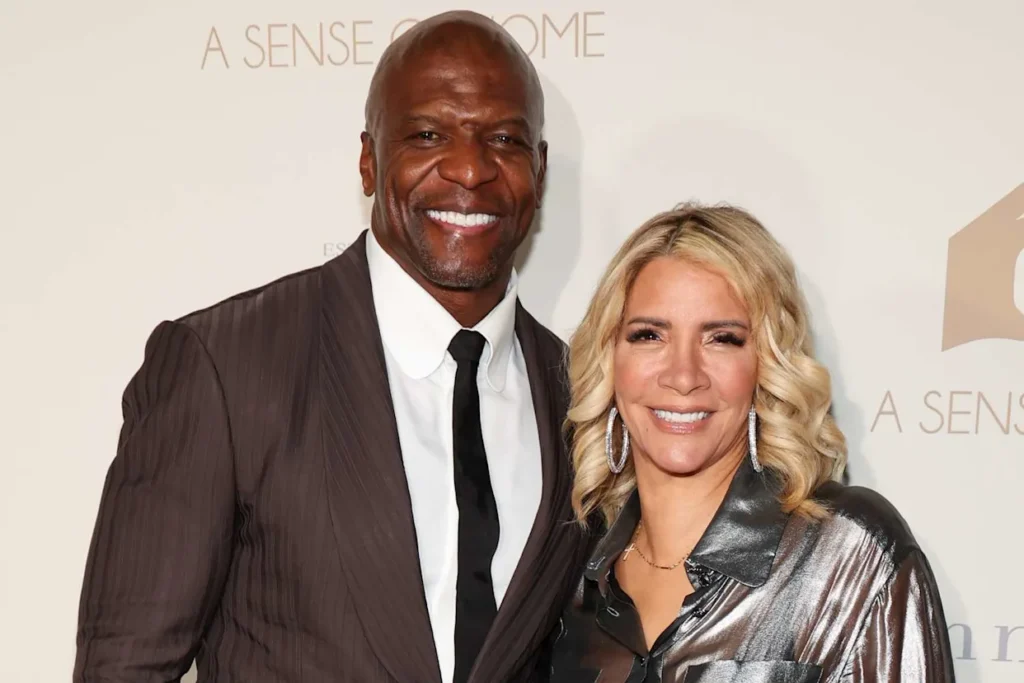
Now, at 60 years old, she’s finally sharing the truth: Rebecca has Parkinson’s disease. And in an exclusive interview with the TODAY show, she revealed a stunning comeback thanks to a brand-new, non-surgical procedure approved by the FDA just last year.
“I feel good. I’m able to write my name and my dates, and I’m able to write with my right hand for the first time in probably three years.” – Rebecca King Crews
Her nightmare began back in 2012 with numbness in her left foot during a workout. That turned into a limp. Then her trainer noticed her left arm wasn’t swinging right. One morning, while putting on lip gloss, she saw her hand shaking.

“My grandmother had tremors –Terry Crews knew exactly what that was,” Rebecca says.
But her primary doctor? He blamed over-exercising and anxiety. Even a neurologist was stumped. It took three long years and a Parkinson’s specialist to finally give her the real diagnosis in 2015.
The hardest part wasn’t the diagnosis – it was the daily humiliation. Tremors made it nearly impossible to brush her teeth, put on makeup, or even write a check.
But Rebecca refused to stop. While still searching for answers, she was writing a book, recording an album, and launching a clothing line. Her motto?
“Just keep walking. You don’t lay down and die because you got a diagnosis.”
That fighting spirit led her to a game-changing treatment: Bilateral Focused Ultrasound – a non-invasive procedure using MRI-guided sound waves to zap the exact brain areas causing movement problems. Unlike deep brain stimulation, there’s no incision, no implant, and recovery is fast.
The device, called Exablate Neuro from Insightec, was approved for one side of the brain in 2021. But last July, the FDA expanded approval to both sides – a huge leap for advanced Parkinson’s patients.
Rebecca had the procedure on March 4. The results were immediate.
- Right-hand tremor? Gone.
- Balance? Dramatically improved.
- Walking? Feels normal again.
She’s already cut back on medication. The only catch? Her left side symptoms remain – so she’s going back this September to get the left side treated.

When her husband Terry saw her write her own name for the first time in three years, he got choked up.
“She’s a superhero. She’s the rock of our lives. When they say ‘sickness and health,’ this is the battle we were designed to fight together.”
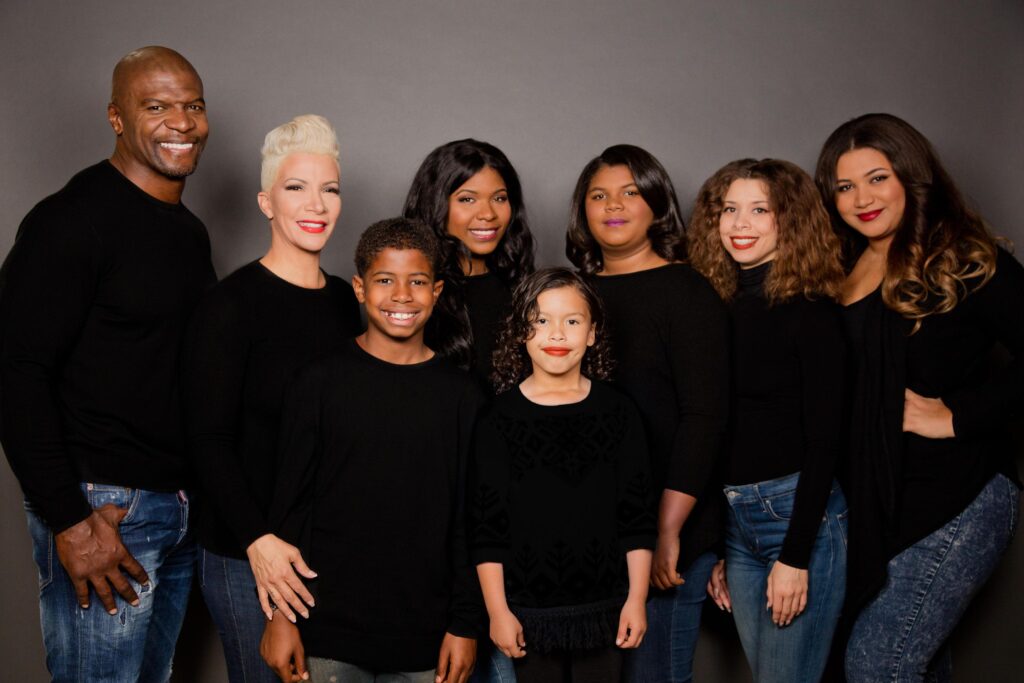
This isn’t the first health war Rebecca has won. In 2020, she had a double mastectomy after a breast cancer diagnosis. Through it all, Terry says they’ve built each other up for nearly 37 years.
Today, Rebecca still drives, plays piano, and attends acting class. She’s not waiting for a cure – she’s living fully right now. But she went public for a reason: to give others hope.
“I wanted to potentially make it more available to others, because it’s an expensive surgery, it’s not covered by insurance yet. And to give hope to people with Parkinson’s – I believe we’re going to find the cure.”
Terry echoes that optimism:
“We feel hopeful. We really feel like we are on the edge of a cure for Parkinson’s. We felt like we had to share this with the world.”
Terry Crews For millions of Americans living with Parkinson’s – or watching a loved one struggle – Rebecca’s story is more than a celebrity headline. It’s a real, tangible reason to believe that better days are coming.

Table of Contents
New ad-supported lineup brings classic Westerns, sitcoms, tattoo competitions, and Spanish-language hits to The Roku Channel
If you’re tired of stacking up monthly streaming bills, Roku just handed you a serious win. The company quietly added six brand-new free channels to The Roku Channel, available right now on every Roku TV and streaming player. No subscriptions. No hidden fees. Just hit the channel numbers and start watching.

This drop is a big deal for cord-cutters who love nostalgia, reality TV drama, or content in Spanish. Let’s break down what’s new, why it matters, and how you can start binging today.
What’s Streaming for Free?
Roku’s latest expansion leans hard into retro comfort food and niche passion points. Here’s every channel landing on your home screen:

Channel 313 – Rawhide (Classic Westerns)
Before Clint Eastwood was a Hollywood icon, he was Rowdy Yates on this gritty black-and-white Western. Rawhide follows a crew of cattle drovers battling outlaws, storms, and their own rivalries across the American frontier. The channel runs episodes 24/7, so you can drop into any cattle drive at any time. Think dusty trails, moral showdowns, and that unmistakable whistling theme song. Watch Rawhide on Roku
Channel 314 – The Beverly Hillbillies (Timeless Sitcoms)
One of the funniest fish-out-of-water stories ever made. The Clampett family strikes oil, moves from the backwoods to Beverly Hills, and turns high society upside down. Granny’s “rheumatism medicine,” Jethro’s sixth-grade education, and Elly May’s critters deliver laughs that somehow still land today. The channel loops episodes nonstop—perfect for background noise or a full nostalgia trip. Stream The Beverly Hillbillies free

Channel 624 – Ink Master (Reality Competition)
Tattoo artists face off in high-stakes challenges: intricate designs, themed canvases, brutal client requests, and elimination rounds judged by industry legends. Expect meltdowns, masterpieces, and plenty of “that’s gotta hurt” moments. If you love Forged in Fire or Blown Away, this channel delivers the same pressure-cooker energy—just with more needles. Binge Ink Master on Roku
Channel 815 – Toso.o (Specialty Entertainment)
This one’s a bit of a wild card. Roku hasn’t spilled all the details yet, but early broadcasts suggest a mix of eclectic programming—think indie shorts, underground music performances, or experimental storytelling. It’s the kind of channel you flip to when you’re tired of the usual suspects. Keep an eye on this slot as the lineup evolves.

Channel 978 – MTV en Español
Finally, a dedicated Spanish-language hub from MTV. This channel serves up music videos, reality shows, celebrity interviews, and lifestyle content tailored for Latino audiences. From reggaeton chart-toppers to behind-the-scenes clips of rising Latin stars, it’s built for younger viewers who want global pop culture with regional flavor. No more hunting for Spanish-dubbed versions—just tune in. Explore MTV en Español
(Note: The original announcement accidentally listed Ink Master, Toso.o, and MTV en Español twice. We’ve cleaned it up for you.)
Why This Matters for US Viewers
Streaming inflation is real. Netflix, Max, Disney+, and others have raised prices repeatedly. Meanwhile, The Roku Channel now offers hundreds of free live TV channels alongside thousands of on-demand movies and shows. These six additions aren’t filler—they’re legit hits with built-in fan bases.
- For boomers and Gen X: Rawhide and The Beverly Hillbillies are pure comfort rewinds.
- For millennials and Gen Z: Ink Master brings reality competition chaos, and MTV en Español taps into Latin music’s mainstream explosion.
- For the curious: Toso.o is a low-risk adventure.
And because it’s ad-supported, you only pay with a few commercial breaks—exactly like old-school TV, but free.

How to Start Watching
If you own a Roku TV or any Roku streaming player, just open The Roku Channel app. Type the channel numbers (313, 314, 624, 815, or 978) into the guide, or search by show name. No extra downloads, no credit card required.
Don’t have a Roku? You can still access The Roku Channel on the web, Amazon Fire TV, Samsung TVs, and via the mobile app. But the channel-number experience works best on Roku hardware.
The Bottom Line
Roku just made its free platform stronger without charging a dime. In a world where every service wants another monthly fee, that’s a rare win for your wallet. Whether you’re here for Clint Eastwood’s early swagger, Granny’s possum recipes, or tattoo ink flying under pressure, there’s something new to stream tonight.
Head to The Roku Channel now and start watching. Your bank account will thank you.


Threats against Federal Judges – 6 Vicious Threats Forced Federal Judges Into Hiding

Jonathan Taylor Thomas: Inspiring Comeback or Quiet Exit? Shocking Truth

Yaxel Lendeborg:Shocking Rise & Inspiring Promise: 1 Yaxel Lendeborg Story That’s Turning Doubt Into Hope

New Movies Streaming – 6 Must-Watch New Movies & Shows Streaming This Weekend (July 18 – 20)

Hollie Strano’s Incredible Comeback: 1 New Radio Gig After WKYC Exit

911 outage – Pennsylvania experiencing problems with 911 calls statewide
-
 Entertainment1 year ago
New Movies Streaming – 6 Must-Watch New Movies & Shows Streaming This Weekend (July 18 – 20)
-
 News12 months ago
Hollie Strano’s Incredible Comeback: 1 New Radio Gig After WKYC Exit
-
 News1 year ago
911 outage – Pennsylvania experiencing problems with 911 calls statewide
-
 News1 year ago
Type 1 Diabetes Barbie Doll – A Step Toward Inclusivity in Toys
-

 Entertainment9 months ago
Donna Jean Godchaux – Heartbreaking Loss: Music Legend Dies at 78
-

 Sports1 year ago
Liverpool vs Athletic Club: Squad Update – Van Dijk, Bradley, Alisson, Gomez Ruled Out
-

 News1 year ago
NYC Subway Flood – Live Updates: NYC Subway Flood Disrupts Commute After Flash Flooding
-

 News1 year ago
Jannik Sinner and Carlos Alcaraz set for Wimbledon final showdown after semifinal wins