The contribution, announced this week, comes during a time of sweeping changes in college athletics, from the rise of Name, Image, and Likeness (NIL) deals to new financial structures under the House v. NCAA settlement.
Stanford officials are calling Freeman’s donation a “game-changing moment” that will help ensure the Cardinal football program remains competitive while supporting the broader mission of Stanford Athletics.
“This is a game-changing gift for Stanford,” said university president Jonathan Levin. “It will help us recruit top talent and compete at the highest level.”
Who Is Bradford M. Freeman?
Bradford Freeman, ’64, is no stranger to Stanford’s legacy. A former Stanford football player, successful private equity founder, and decades-long university trustee, Freeman has embodied the connection between academic excellence and athletic achievement.
After earning his bachelor’s degree in economics at Stanford, he received an MBA from Harvard Business School and later co-founded Freeman Spogli & Co., a leading private equity investment firm.
His passion for Stanford athletics never waned. In 1988, Freeman endowed the nation’s first head coaching position in football — the Bradford M. Freeman Director of Football — currently held by Frank Reich.
Details of the $50 Million Gift
Freeman’s gift will directly fund:
Five new football scholarships for student-athletes
Support for institutional NIL programs, ensuring players can benefit fairly from name, image, and likeness opportunities
Upgraded football facilities, including naming of the Bradford M. Freeman Tunnel and Bradford M. Freeman Gate at Stanford Stadium
Stanford will also recognize him as one of six “Trailblazer Honorees” in its Home of Champions museum, which celebrates athletic excellence across the university’s 36 varsity sports.
“Brad’s belief in the future of our program strengthens not only football but the foundation of excellence that defines Stanford Athletics,” said John Donahoe, Stanford’s new Jaquish & Kenninger Director of Athletics.
Andrew Luck: Building a Bridge to the Future
Former Stanford quarterback and NFL star Andrew Luck, who now serves as General Manager of Stanford Football, praised the donation as a turning point.
“With Brad’s incredible gift, we are positioned to win on the field and build a bridge to a sustainable future for Stanford football,” Luck said.
Luck, a Stanford alumnus with degrees in both architecture and education, returned to his alma mater in 2023 to help guide the program through a transformative era of college sports.
Adapting to a New Era in College Athletics
Bradford M. Freeman
Stanford’s leadership emphasized that Freeman’s contribution will help the university navigate the rapidly changing landscape of college sports.
Recent legal and structural changes — such as NIL policies, the transfer portal, and direct compensation models — have forced athletic programs to rethink their financial strategies.
“Freeman’s gift will allow Stanford to uphold both its academic and athletic ideals,” President Levin said. “It’s about maintaining balance — competitive excellence and institutional integrity.”
Stanford has already begun adapting by expanding athletic scholarships, enhancing NIL infrastructure, and supporting athletes’ holistic development both on and off the field.
Freeman’s Deep Stanford Legacy
Freeman’s relationship with Stanford spans nearly six decades of service and philanthropy.
Served 10 years on Stanford’s Board of Trustees (1995–2005)
Co-founded the Freeman Spogli Institute for International Studies in 2005 with a $50 million endowment
Supported undergraduate scholarships, professorships, and the Bing Overseas Studies Program
Actively participated in multiple fundraising campaigns for Stanford Athletics
His humility and humor are well known on campus. Reflecting on his playing days, Freeman once joked:
“I went from outstanding player of the year in high school to setting a record at Stanford for the most minutes not played in four years.”
Honoring a Lifelong Fan and Leader
Stanford football will honor Freeman by naming two key stadium landmarks after him:
Bradford M. Freeman Tunnel – where players and coaches enter Stanford Stadium
Bradford M. Freeman Gate – one of the most trafficked entrances for fans
Freeman will also be featured prominently in Stanford’s Home of Champions, recognizing his contributions as both a philanthropist and lifelong Cardinal fan.
“I remain grateful for the opportunities my Stanford football scholarship gave me,” Freeman said. “I hope my gift will herald a new era of excellence for Stanford football.”
The Bigger Picture: Football’s Role at Stanford
Football is more than a sport at Stanford — it’s a financial and cultural pillar. With 36 varsity sports and the nation’s most NCAA championships, Stanford Athletics depends on football and basketball for much of its media and ticket revenue.
Following the dissolution of the Pac-12, Stanford’s move to the Atlantic Coast Conference (ACC) in 2024 reinforced its commitment to national competition and long-term sustainability.
“Athletics is part of the fabric of Stanford, and it brings people together,” President Levin said. “We’re grateful that playing football here changed Brad’s life — and that he continues to change the lives of others.”
Conclusion: A Legacy Beyond the Field
Bradford M. Freeman’s $50 million donation reflects not just generosity, but a vision for what college athletics can be — a partnership between excellence, education, and opportunity.
As Stanford Football looks toward the future, Freeman’s legacy will stand as a reminder that the values of teamwork, perseverance, and gratitude never fade.
“With support like Brad’s,” Andrew Luck said, “we can honor the past and shape the future — one championship at a time.”
Colorado vs Baylor: Buffaloes Face Crucial Big 12 Test in Waco
Thank you for reading this post, don't forget to subscribe!
Table of Contents
Colorado vs Baylor: Buffaloes Seek Big 12 Redemption Against Bears
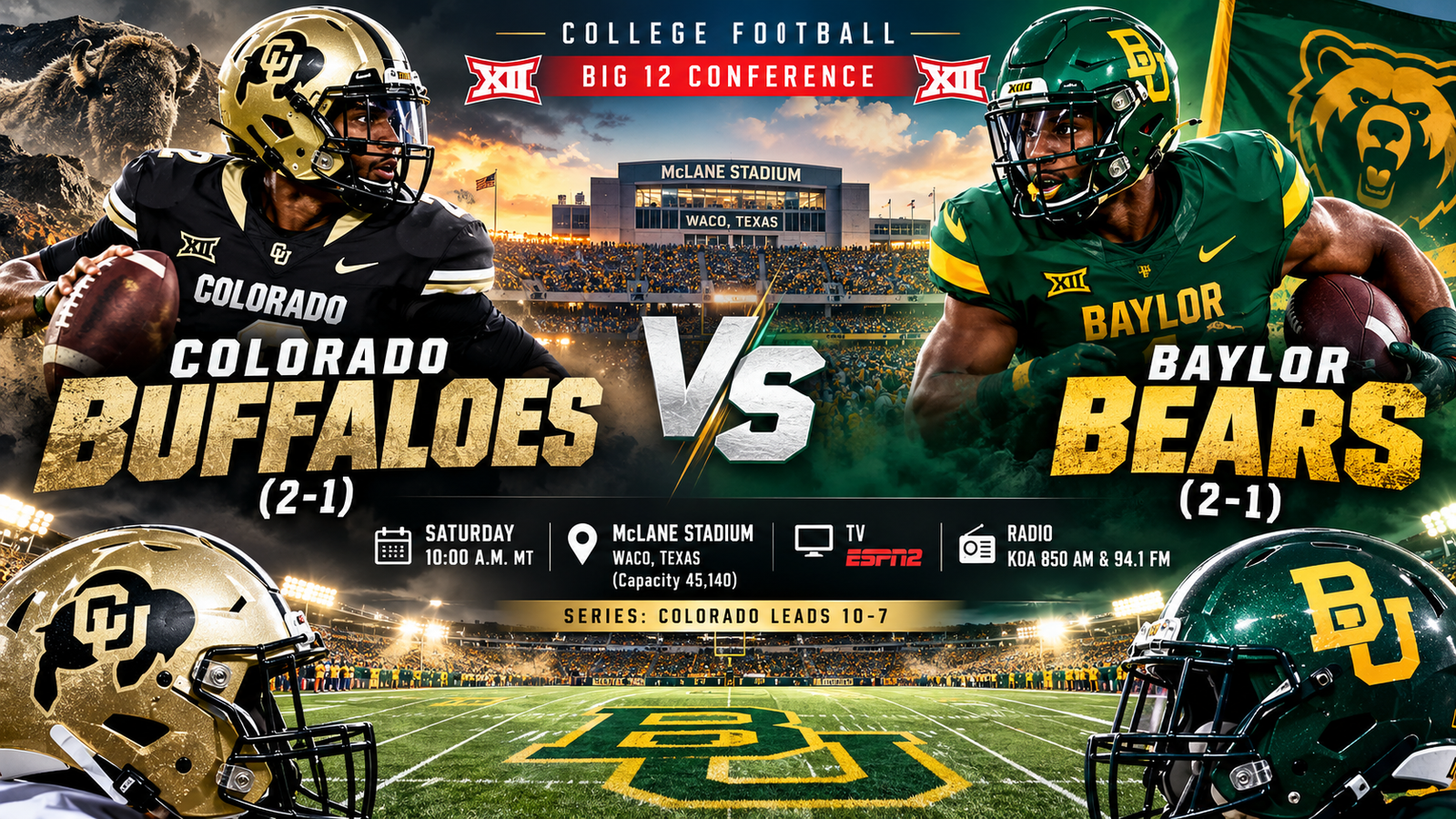
The Colorado Buffaloes are preparing for a challenging Big 12 Conference opener against the Baylor Bears on Saturday at McLane Stadium in Waco, Texas. Both teams enter the matchup with identical 2-1 records, but Colorado faces pressure to respond after a disappointing 41-7 loss to Northwestern.
For head coach Deion Sanders and the Buffaloes, the game represents an opportunity to reset their season and establish momentum in conference play. Baylor, meanwhile, will look to protect its home field and avoid a repeat of its heartbreaking overtime loss to Colorado in 2024.
The matchup brings back memories of last season’s dramatic contest, but both teams have undergone changes since then. Colorado’s identity has shifted toward a stronger running game and improved defensive performance, while Baylor will look to capitalize on its home-field advantage.
Colorado vs Baylor: Game Details
Here’s everything fans need to know about Saturday’s Big 12 matchup.
Matchup Details
Information
Game
Colorado Buffaloes vs. Baylor Bears
Date
Saturday
Kickoff
10:00 a.m. MT
Venue
McLane Stadium
Location
Waco, Texas
TV Coverage
ESPN2
Radio
KOA 850 AM & 94.1 FM
Colorado Record
2-1
Baylor Record
2-1
All-Time Series
Colorado leads 10-7
Colorado Looks to Bounce Back After Northwestern Defeat
Colorado enters the Baylor game following a difficult 41-7 loss to Northwestern. The defeat exposed areas that the Buffaloes need to address, particularly on defense and in maintaining possession.
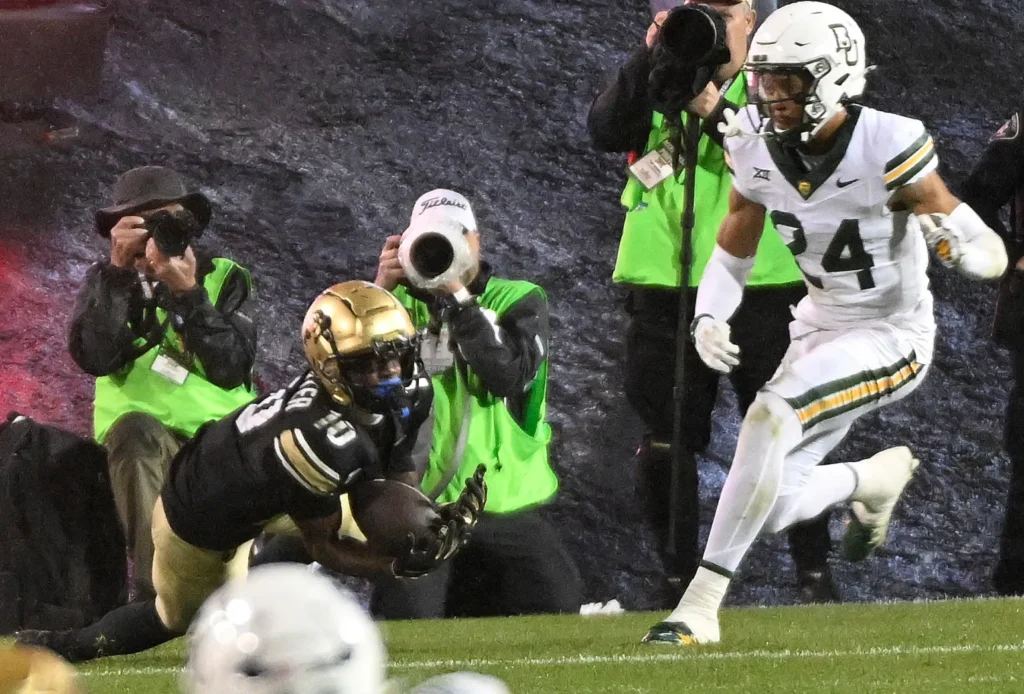
Colorado vs Baylor
Despite the setback, Colorado has shown progress in its running game during the early part of the season. The Buffaloes have rushed for at least 180 yards in each of their first three games, averaging 4.5 yards per carry.
That improvement marks a notable change from last season, when Colorado averaged 3.5 yards per carry.
Against Northwestern, the Buffaloes averaged 5.5 yards per carry, even as the passing game and overall offensive execution struggled.
Colorado will need to build on that ground-game production against Baylor. Establishing a consistent rushing attack could help the offense control the tempo, reduce pressure on the quarterback, and keep the Bears’ defense on the field.
Colorado’s Defense Shows Signs of Improvement
While the Northwestern loss raised concerns, Colorado’s defensive numbers suggest progress compared with last season.
In 2024, the Buffaloes ranked near the bottom nationally against the run, allowing an average of 222.5 rushing yards per game.
Through their first three games this season, Colorado has reduced that figure to 120 rushing yards per game, while opponents are averaging 3.3 yards per carry.
The defense also delivered a strong performance against Georgia Tech, limiting the Yellow Jackets to just 51 rushing yards on 30 carries.
Defensive lineman Lamont Lester Jr. recorded three sacks in Colorado’s season opener, providing an early indication of the team’s potential to pressure opposing quarterbacks.
However, Northwestern exposed some weaknesses. The Wildcats rushed for 182 yards and controlled possession for nearly 37 minutes.
Against Baylor, Colorado’s defensive front will need to maintain discipline, limit rushing lanes, and prevent the Bears from controlling the clock.
Injury Concerns Could Affect Colorado’s Offense
Colorado will enter the game with several personnel concerns that could influence its offensive approach.
Running back Damian Henderson II is listed as doubtful, while offensive lineman Demetrius Hunter and tight end Charlie Williams are expected to miss the game.
Running back JaQuail Smith, who rushed for 91 yards on eight carries against Northwestern, is listed as probable after previously being considered questionable.
Smith’s availability could be particularly important as Colorado looks to maintain its improved rushing production.
The team will also be without players whom Sanders said were no longer part of the program. Colorado has not publicly identified those players, and the official roster had not been updated as of Thursday.
These changes add another layer of uncertainty as the Buffaloes prepare for their first conference game.
Baylor Remembers the Pain of the 2024 Loss
For Baylor, Saturday’s matchup carries memories of a difficult ending to the 2024 meeting between the teams.
Colorado defeated Baylor in overtime in a game that became one of the defining moments of the Buffaloes’ Big 12 campaign. The loss was particularly painful for Baylor head coach Dave Aranda.
Aranda later described the defeat as a “heart-wrenching loss” and said he continues to use the experience as a teaching point when discussing the importance of finishing games.
Reflecting on that contest, Aranda said the season could have unfolded differently if Baylor had finished the decisive play.
The Bears will have an opportunity to respond on their home field this time, with the 2024 result serving as a reminder of how small margins can determine the outcome of a game.
However, the teams have changed significantly since that meeting, making Saturday’s contest a fresh test for both programs.
Colorado’s New Identity Under Deion Sanders
The current Colorado roster looks different from the team that captured national attention in 2024.
That squad featured quarterback Shedeur Sanders and two-way star Travis Hunter, who went on to win the Heisman Trophy. Their ability to create explosive plays through the passing game helped define Colorado’s offensive identity.
This year’s team has placed greater emphasis on physical football, particularly in the running game and along the defensive line.
Sanders has also spoken about the changing nature of college football rosters in the transfer portal era.
He noted that players who once spent four or five years with a program now often move between schools much more frequently.
That turnover has made building continuity more challenging, especially for teams trying to establish a consistent identity.
Colorado’s matchup with Baylor will provide another opportunity to evaluate how effectively the Buffaloes can translate their physical style into conference success.
Former Colorado Players Add Another Storyline
Saturday’s game also features players who previously wore Colorado uniforms but now play for Baylor.
Wide receiver Dre’lon Miller and offensive lineman Cooper Lovelace are among the former Buffaloes now on the Bears’ roster.
Aranda has spoken about his conversations with Sanders regarding players who transferred between the programs.
Sanders has said the two coaches regularly discuss those players and that he has been straightforward when asked about them.
The presence of former teammates adds an interesting dimension to the matchup, particularly as both programs continue to navigate the transfer portal and roster changes.
Colorado vs Baylor: What to Watch
Several factors could shape the outcome of Saturday’s game.
1. Colorado’s Running Game
The Buffaloes have shown consistent improvement on the ground. Their ability to sustain drives and create manageable third-down situations will be important against Baylor.
2. Baylor’s Home-Field Advantage
Playing at McLane Stadium gives Baylor the benefit of its home crowd. The Bears will look to use that environment to establish early momentum.
3. Defensive Line Performance
Colorado’s defensive front has shown improvement, but it must contain Baylor’s rushing attack and avoid allowing long, time-consuming drives.
4. Turnovers and Game Management
After a difficult loss to Northwestern, Colorado will need to limit mistakes and maintain composure. Protecting the football and finishing drives could prove decisive.
Colorado vs Baylor: A Defining Early-Season Test
Colorado’s Big 12 opener against Baylor offers both teams an opportunity to establish their direction for the conference season.
The Buffaloes are looking to put the Northwestern defeat behind them and build on the progress shown in their running game and defensive performance.
Baylor, meanwhile, will seek to take advantage of home-field conditions and avoid another painful finish against Colorado.
The teams enter the game with matching 2-1 records, and their recent history adds another layer of intrigue to the matchup.
For Colorado, the challenge is clear: turn the lessons from its latest defeat into a more disciplined and complete performance.
Saturday’s game in Waco will provide an early indication of how the Buffaloes respond when conference play begins.
Thank you for reading this post, don't forget to subscribe!
Table of Contents:
Maria Bartiromo Leaves Fox News After 12 Years
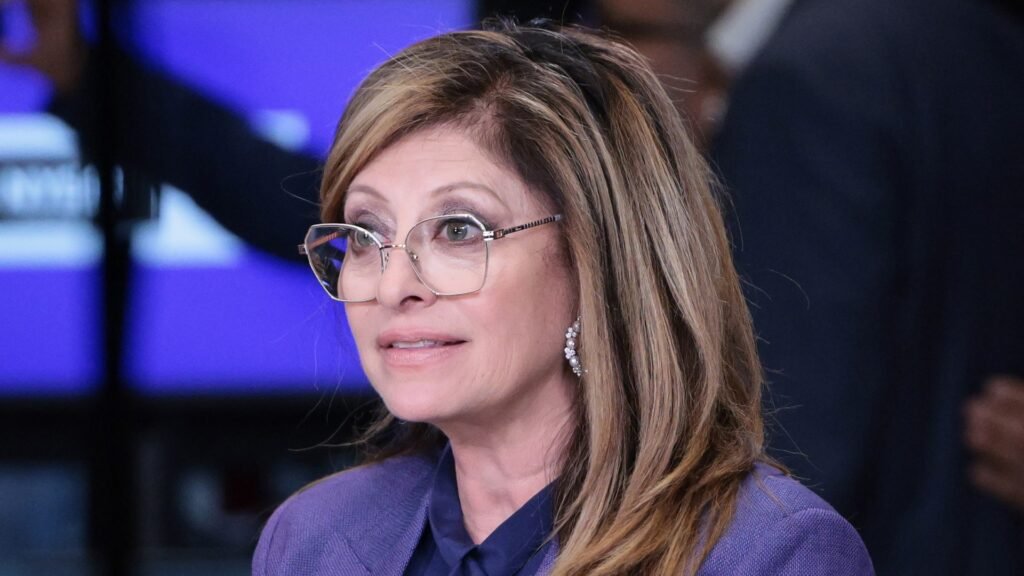
Maria Bartiromo
Maria Bartiromo, one of the most recognizable names in American business television, is leaving Fox News Media after more than 12 years with the company.
Fox News Media announced on September 3, 2026, that Bartiromo is no longer with the network, effective immediately. The company thanked her for her 12½ years of work and wished her well in the next chapter of her career. Fox did not give a reason for the departure.
The announcement came as a surprise to many viewers because Bartiromo had been a familiar presence on both Fox Business Network and Fox News.
What Happened to Bartiromo?
Bartiromo’s final episode of Mornings with Maria aired Thursday morning. Beginning Friday, the program will become Mornings with FOX Business and will use rotating anchors.
Her weekly program,Bartiromo’s Wall Street, will also receive a new name: FBN’s Wall Street. Cheryl Casone will host the program initially, with other anchors expected to rotate into the position.
Meanwhile, Sunday Morning Futures will be hosted by Jason Chaffetz this Sunday while Fox News considers a permanent replacement.
A Remarkable Career on Wall Street:
Maria Bartiromo
Although her Fox departure is a major change, Bartiromo has already built an extraordinary career in financial journalism.
Before joining Fox Business in 2014, she spent about two decades at CNBC. She became particularly well known for her work covering Wall Street and financial markets.
In 1995, Bartiromo became the first journalist to report live regularly from the floor of the New York Stock Exchange. The achievement helped establish her as a pioneering figure in television financial journalism.
Over her career, she has interviewed major business and political figures and received numerous awards, including two Emmy Awards and a Gracie Award. She was also inducted into the Cable Hall of Fame in 2011.
An Uncertain but Promising Next Chapter
Maria Bartiromo
The biggest unanswered question is what Maria Bartiromo will do next.
Fox News has not publicly explained why the relationship ended, and Bartiromo had not publicly commented on the announcement at the time of the initial reports. That leaves considerable uncertainty surrounding her immediate plans.
Despite the abrupt ending, her long career gives her several possible paths. She could return to financial broadcasting, expand her writing and commentary work, or pursue another role in media and business.
For now, her departure marks the end of an important era at Fox Business. But given Bartiromo’s experience, influence and long-standing presence in financial journalism, this may be less of an ending than the beginning of a new chapter.
Why Maria Bartiromo Remains Important
Maria Bartiromo
Maria Bartiromo has spent decades helping audiences understand markets, business and economic policy. From her pioneering work at the New York Stock Exchange to her years at CNBC and Fox, she has remained a prominent figure in American financial media.
Her sudden exit from Fox News may be disappointing for longtime viewers, but her career record suggests that her influence is unlikely to disappear anytime soon.
The next move from Maria Bartiromo could therefore be one of the most closely watched developments in financial media.
Thank you for reading this post, don't forget to subscribe!
Table of Contents
2027 Could Become a Defining Year for the Future
2027
The year is already attracting attention as governments, businesses, technology companies and entertainment industries prepare for major developments. From artificial intelligence and digital transformation to international sports and changing consumer habits, the year could bring exciting opportunities while also creating serious challenges.
Some developments are already scheduled. The FIFA Women’s World Cup will take place in Brazil, while the Cricket World Cup is scheduled across South Africa, Zimbabwe and Namibia. The first Olympic Esports Games are also planned for Riyadh.
For consumers and businesses, however, the biggest story may be technological change.
Artificial Intelligence Could Dominate 2027
Artificial intelligence is expected to play an even larger role in everyday life by 2027. Businesses are increasingly using AI for research, customer service, marketing, software development and content creation.
The potential benefits are significant. AI could help companies become more productive, assist doctors with complex tasks and provide consumers with increasingly personalized digital services.
But there is also a darker side. Concerns about misinformation, cybersecurity, privacy and job disruption are likely to remain major issues. The challenge will be finding a balance between innovation and responsible use.
2027 Could Be a Major Year for Entertainment
2027
The global entertainment industry is expected to continue its shift toward digital platforms, streaming, gaming and advertising.
PwC previously projected that global entertainment and media revenue could reach approximately $2.8 trillion, with digital sources accounting for nearly three-quarters of industry revenue. Gaming was identified as one of the industry’s major growth engines.
That creates a positive outlook for filmmakers, musicians, game developers and digital creators. At the same time, intense competition could make it harder for individual streaming services and entertainment companies to maintain profitability.
Major Sports Events Will Bring Global Attention
Sports will be another important part of the calendar.
The 2027 FIFA Women’s World Cup in Brazil is expected to generate substantial international interest. Women’s professional soccer is also continuing to grow in the United States, with the NWSL positioning its 2027 season around the broader international soccer calendar.
Cricket fans will also have a major event to follow, with the Cricket World Cup scheduled to be hosted by South Africa, Zimbabwe and Namibia.
These events could provide positive economic opportunities for host countries, tourism businesses and broadcasters, although large sporting events can also face challenges involving costs, infrastructure and logistics.
Technology Companies Prepare for a New Era
Technology exhibitions are already looking forward to it. CES for example, is scheduled for January 6–9 in Las Vegas, highlighting how artificial intelligence, connected devices and other emerging technologies will remain central to the technology industry.
Businesses are expected to focus heavily on:
Artificial intelligence
Robotics
Cloud computing
Cybersecurity
Connected devices
Electric vehicles
Renewable energy
Advanced digital services
The positive possibility is faster innovation. The negative concern is that companies and workers that fail to adapt could find themselves increasingly behind their competitors.
The Global Economy Faces Opportunities and Risks
The economic picture for 2027 is difficult to predict with certainty.
Technology investment could support productivity and create new industries. However, inflation, interest rates, geopolitical tensions and changes in consumer spending could create uncertainty.
Businesses are therefore likely to prioritize efficiency and flexibility. Companies capable of adopting new technology without losing sight of customer needs could have an advantage.
Climate and Renewable Energy Remain Important
Climate change will remain a major concern in 2027.
Governments and businesses are expected to continue investing in renewable energy, electric transportation and more efficient infrastructure. These developments could create new industries and jobs while reducing dependence on fossil fuels.
However, extreme weather, rising infrastructure costs and disagreements over environmental policies could create significant obstacles.
Positive Outlook: Innovation Creates New Opportunities
There are plenty of reasons to be optimistic about 2027.
Technology could make healthcare more efficient, businesses could become more productive, and consumers could gain access to better digital products. International sporting and entertainment events could also create tourism and economic opportunities.
For workers, learning new digital skills may open doors to emerging careers in AI, cybersecurity, healthcare technology, renewable energy and advanced manufacturing.
Negative Outlook: Rapid Change Could Create New Problems
The future will not be completely positive:
2027
Rapid technological development could increase concerns about employment, misinformation and privacy. Global political tensions could also affect trade and financial markets.
The growing amount of AI-generated content may make it more difficult for people to distinguish authentic information from misleading material. Cybersecurity could become an even bigger priority as more services move online.
What Could Make 2027 Different?
One of the biggest themes of 2027 may be adaptation.
People who learn to work effectively with new technologies could benefit from emerging opportunities. Companies that embrace innovation responsibly may gain an advantage, while organizations that resist change could struggle.
The same principle could apply to governments, which will need to balance technological progress with privacy, security, employment and public trust.
Final Outlook for 2027
2027 has the potential to be an exciting but complicated year. Major sporting competitions, technological advances and continued growth in digital entertainment could create a powerful sense of optimism.
At the same time, economic uncertainty, geopolitical tensions, climate concerns and rapid technological disruption could produce difficult challenges.
The most important story may therefore not be what happens in 2027, but how successfully people, businesses and governments adapt to it.
Useful Links
United Nations — Global issues and international developments.



















 Entertainment11 months ago

 Sports1 year ago
 News1 year ago
 News1 year ago