
Business
Joan Kennedy Dies at 89: Grace, Tragedy, and the Shadows of a Political Dynasty


Table of Contents:
Joan Kennedy Dies at 89: Grace, Tragedy, and the Shadows of a Political Dynasty
Introduction: A Life Intertwined With American History
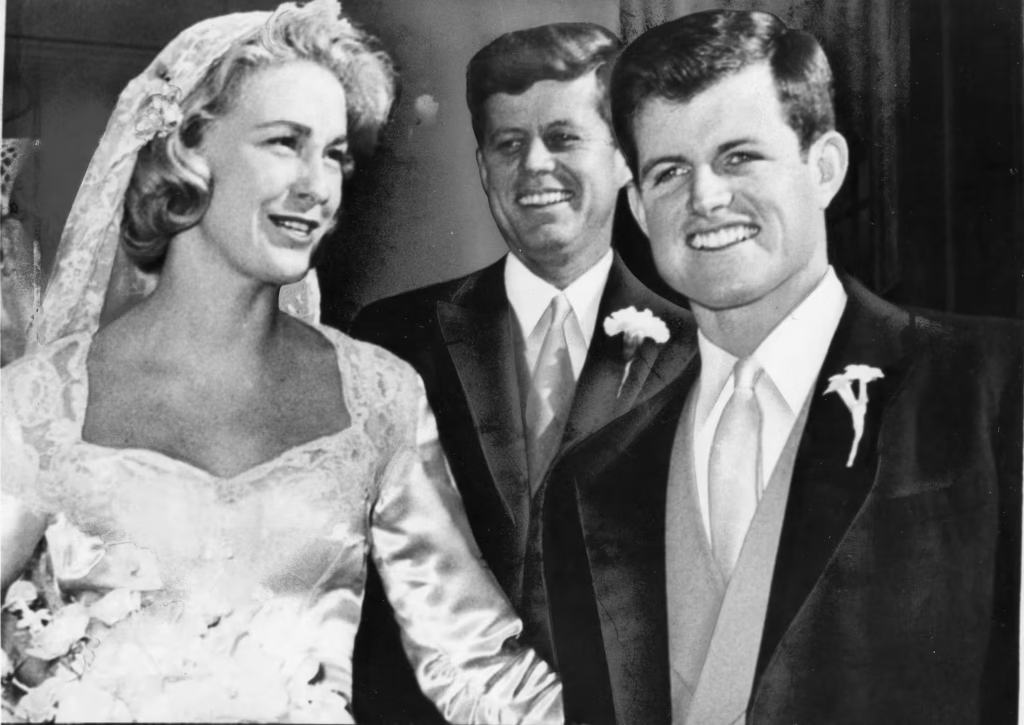
Joan Kennedy, the first wife of the late Senator Edward “Ted” Kennedy, passed away peacefully in her Boston home at age 89. Her life story was one of extraordinary highs and heartbreaking lows — a woman who lived within America’s most famous political family, yet constantly fought to maintain her own identity amid the glare of fame and personal struggle.
Her death was confirmed by Steve Kerrigan, chairman of the Massachusetts Democratic Party, who said she “died in her sleep.” No cause was specified.
From Music to Politics: The Early Life of Joan Bennett Kennedy
Born Virginia Joan Bennett in 1936 in New York, she grew up in a devout Catholic household and developed a passion for music. After earning her degree from Manhattanville College, she worked briefly as a music teacher before meeting Ted Kennedy, the youngest brother of President John F. Kennedy and Senator Robert F. Kennedy.
The couple married in 1958, launching her into the Kennedy political orbit. Known for her poise and beauty, she was often compared to Jackie Kennedy, though her life would follow a far more turbulent path.
A Reluctant Public Figure
Joan Kennedy’s early years in the Kennedy family placed her at the center of American political glamour. She campaigned tirelessly for her husband during his Senate races and during his 1980 presidential campaign, where she was photographed standing beside him and their children, Kara Ann and Patrick Kennedy, as he announced his bid.
Despite her elegant public image, friends often described her as reserved, shy, and deeply private — someone who struggled with the relentless attention that came with being a Kennedy.
Behind Closed Doors: Struggles With Alcoholism
While the Kennedy name symbolized strength and ambition, Joan’s personal battles told a different story. Haunted by her family’s own history of alcoholism, she began drinking heavily during her marriage.
Her difficulties were compounded by Ted Kennedy’s infidelities and the intense public scrutiny following the Chappaquiddick incident in 1969, when a car driven by Senator Kennedy went off a bridge, killing campaign worker Mary Jo Kopechne. Joan, pregnant at the time, was thrust unwillingly into the national spotlight.
Over the years, she entered treatment programs multiple times, and though she experienced periods of sobriety, her health declined due to her dependency.
The End of a Marriage and the Weight of Public Life

The Kennedys officially divorced in 1982, after nearly 25 years of marriage. Despite their separation, Joan maintained ties to the Kennedy family and remained devoted to their children.
Their daughter Kara Kennedy, a filmmaker and philanthropist, died of a heart attack in 2011 at age 51. Their son Patrick Kennedy, a former U.S. Representative from Rhode Island, has spoken openly about his mother’s influence and his own advocacy for mental health and addiction recovery.
A Legacy of Grace and Resilience
In her later years, Joan lived quietly in Boston, focusing on her health and occasionally attending family gatherings. Though her public appearances became rare, she continued to be a symbol of dignity and endurance.
Friends remembered her as “a kind, gentle woman who faced unimaginable pressure with grace.” Despite decades of personal struggle, she never lost her love for music and family, often spending quiet afternoons at the piano.
The Kennedy Mystique and Enduring Tragedy
Joan’s life mirrored much of the Kennedy saga itself — dazzling promise shadowed by loss. She witnessed the assassinations of President John F. Kennedy and Senator Robert Kennedy, lived through political scandal, and endured personal heartbreak.
Her story reflects the emotional cost of life within a dynasty — one that shaped American politics and culture for generations.
As the news of her passing spread, tributes poured in from across Massachusetts and Washington. Political figures and friends alike described her as “a figure of quiet strength amid chaos.”
Remembering Joan Kennedy
Joan Kennedy’s death marks the closing of a chapter in the storied Kennedy family history. Though often overshadowed by the men in her life, her journey tells a more intimate truth: the resilience of a woman who lived — and suffered — in the glare of power, yet never stopped seeking peace.
Her memory endures through her children, her music, and her unspoken courage in the face of public and private storms.
🔗 Related Reading
- Ted Kennedy’s Legacy and Political Influence
- Patrick Kennedy’s Mental Health Advocacy
- The Kennedy Family Timeline
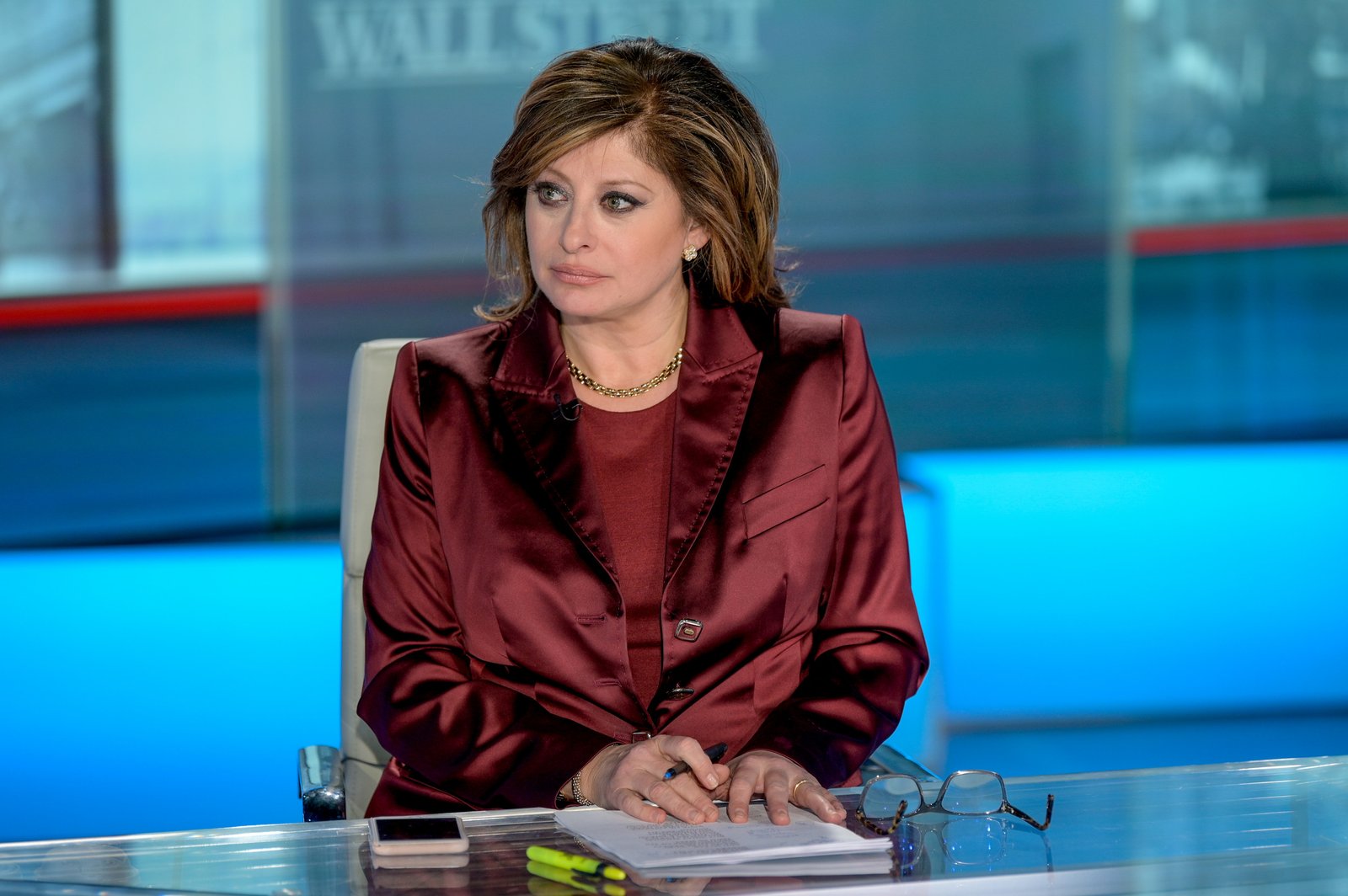
Table of Contents:
Maria Bartiromo Leaves Fox News After 12 Years
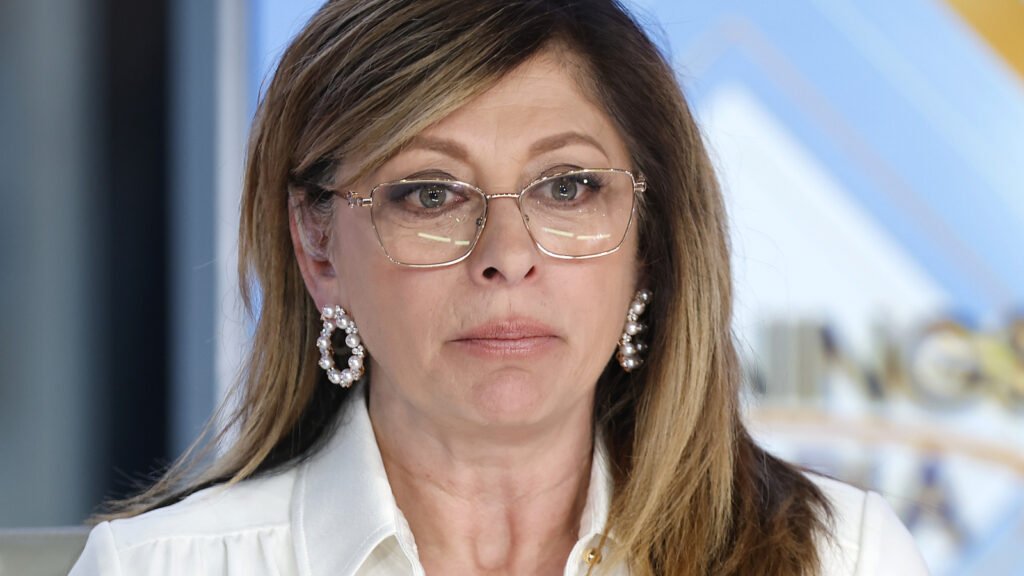
Maria Bartiromo, one of the most recognizable names in American business television, is leaving Fox News Media after more than 12 years with the company.
Fox News Media announced on September 3, 2026, that Bartiromo is no longer with the network, effective immediately. The company thanked her for her 12½ years of work and wished her well in the next chapter of her career. Fox did not give a reason for the departure.
The announcement came as a surprise to many viewers because Bartiromo had been a familiar presence on both Fox Business Network and Fox News.
What Happened to Bartiromo?
Bartiromo’s final episode of Mornings with Maria aired Thursday morning. Beginning Friday, the program will become Mornings with FOX Business and will use rotating anchors.
Her weekly program,Bartiromo’s Wall Street, will also receive a new name: FBN’s Wall Street. Cheryl Casone will host the program initially, with other anchors expected to rotate into the position.
Meanwhile, Sunday Morning Futures will be hosted by Jason Chaffetz this Sunday while Fox News considers a permanent replacement.
A Remarkable Career on Wall Street:
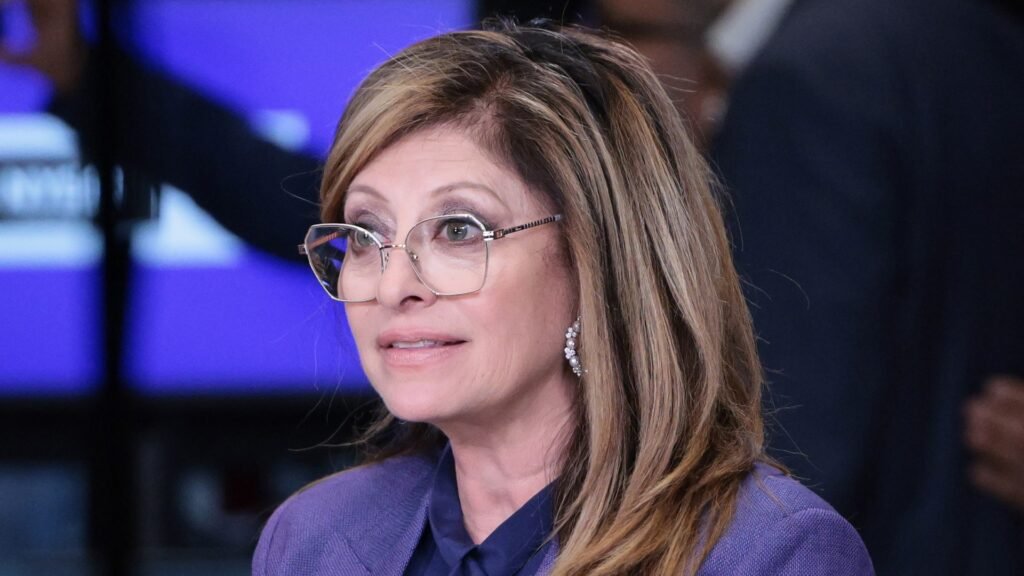
Although her Fox departure is a major change, Bartiromo has already built an extraordinary career in financial journalism.
Before joining Fox Business in 2014, she spent about two decades at CNBC. She became particularly well known for her work covering Wall Street and financial markets.
In 1995, Bartiromo became the first journalist to report live regularly from the floor of the New York Stock Exchange. The achievement helped establish her as a pioneering figure in television financial journalism.
Over her career, she has interviewed major business and political figures and received numerous awards, including two Emmy Awards and a Gracie Award. She was also inducted into the Cable Hall of Fame in 2011.
An Uncertain but Promising Next Chapter

The biggest unanswered question is what Maria Bartiromo will do next.
Fox News has not publicly explained why the relationship ended, and Bartiromo had not publicly commented on the announcement at the time of the initial reports. That leaves considerable uncertainty surrounding her immediate plans.
Despite the abrupt ending, her long career gives her several possible paths. She could return to financial broadcasting, expand her writing and commentary work, or pursue another role in media and business.
For now, her departure marks the end of an important era at Fox Business. But given Bartiromo’s experience, influence and long-standing presence in financial journalism, this may be less of an ending than the beginning of a new chapter.
Why Maria Bartiromo Remains Important

Maria Bartiromo has spent decades helping audiences understand markets, business and economic policy. From her pioneering work at the New York Stock Exchange to her years at CNBC and Fox, she has remained a prominent figure in American financial media.
Her sudden exit from Fox News may be disappointing for longtime viewers, but her career record suggests that her influence is unlikely to disappear anytime soon.
The next move from Maria Bartiromo could therefore be one of the most closely watched developments in financial media.

Table of Contents
2027 Could Become a Defining Year for the Future

The year is already attracting attention as governments, businesses, technology companies and entertainment industries prepare for major developments. From artificial intelligence and digital transformation to international sports and changing consumer habits, the year could bring exciting opportunities while also creating serious challenges.
Some developments are already scheduled. The FIFA Women’s World Cup will take place in Brazil, while the Cricket World Cup is scheduled across South Africa, Zimbabwe and Namibia. The first Olympic Esports Games are also planned for Riyadh.
For consumers and businesses, however, the biggest story may be technological change.
Artificial Intelligence Could Dominate 2027
Artificial intelligence is expected to play an even larger role in everyday life by 2027. Businesses are increasingly using AI for research, customer service, marketing, software development and content creation.
The potential benefits are significant. AI could help companies become more productive, assist doctors with complex tasks and provide consumers with increasingly personalized digital services.
But there is also a darker side. Concerns about misinformation, cybersecurity, privacy and job disruption are likely to remain major issues. The challenge will be finding a balance between innovation and responsible use.
2027 Could Be a Major Year for Entertainment

The global entertainment industry is expected to continue its shift toward digital platforms, streaming, gaming and advertising.
PwC previously projected that global entertainment and media revenue could reach approximately $2.8 trillion, with digital sources accounting for nearly three-quarters of industry revenue. Gaming was identified as one of the industry’s major growth engines.
That creates a positive outlook for filmmakers, musicians, game developers and digital creators. At the same time, intense competition could make it harder for individual streaming services and entertainment companies to maintain profitability.
Major Sports Events Will Bring Global Attention
Sports will be another important part of the calendar.
The 2027 FIFA Women’s World Cup in Brazil is expected to generate substantial international interest. Women’s professional soccer is also continuing to grow in the United States, with the NWSL positioning its 2027 season around the broader international soccer calendar.
Cricket fans will also have a major event to follow, with the Cricket World Cup scheduled to be hosted by South Africa, Zimbabwe and Namibia.
These events could provide positive economic opportunities for host countries, tourism businesses and broadcasters, although large sporting events can also face challenges involving costs, infrastructure and logistics.
Technology Companies Prepare for a New Era
Technology exhibitions are already looking forward to it. CES for example, is scheduled for January 6–9 in Las Vegas, highlighting how artificial intelligence, connected devices and other emerging technologies will remain central to the technology industry.
Businesses are expected to focus heavily on:
Artificial intelligence
Robotics
Cloud computing
Cybersecurity
Connected devices
Electric vehicles
Renewable energy
Advanced digital services
The positive possibility is faster innovation. The negative concern is that companies and workers that fail to adapt could find themselves increasingly behind their competitors.
The Global Economy Faces Opportunities and Risks
The economic picture for 2027 is difficult to predict with certainty.
Technology investment could support productivity and create new industries. However, inflation, interest rates, geopolitical tensions and changes in consumer spending could create uncertainty.
Businesses are therefore likely to prioritize efficiency and flexibility. Companies capable of adopting new technology without losing sight of customer needs could have an advantage.
Climate and Renewable Energy Remain Important
Climate change will remain a major concern in 2027.
Governments and businesses are expected to continue investing in renewable energy, electric transportation and more efficient infrastructure. These developments could create new industries and jobs while reducing dependence on fossil fuels.
However, extreme weather, rising infrastructure costs and disagreements over environmental policies could create significant obstacles.
Positive Outlook: Innovation Creates New Opportunities
There are plenty of reasons to be optimistic about 2027.
Technology could make healthcare more efficient, businesses could become more productive, and consumers could gain access to better digital products. International sporting and entertainment events could also create tourism and economic opportunities.
For workers, learning new digital skills may open doors to emerging careers in AI, cybersecurity, healthcare technology, renewable energy and advanced manufacturing.
Negative Outlook: Rapid Change Could Create New Problems
The future will not be completely positive:

Rapid technological development could increase concerns about employment, misinformation and privacy. Global political tensions could also affect trade and financial markets.
The growing amount of AI-generated content may make it more difficult for people to distinguish authentic information from misleading material. Cybersecurity could become an even bigger priority as more services move online.
What Could Make 2027 Different?
One of the biggest themes of 2027 may be adaptation.
People who learn to work effectively with new technologies could benefit from emerging opportunities. Companies that embrace innovation responsibly may gain an advantage, while organizations that resist change could struggle.
The same principle could apply to governments, which will need to balance technological progress with privacy, security, employment and public trust.
Final Outlook for 2027
2027 has the potential to be an exciting but complicated year. Major sporting competitions, technological advances and continued growth in digital entertainment could create a powerful sense of optimism.
At the same time, economic uncertainty, geopolitical tensions, climate concerns and rapid technological disruption could produce difficult challenges.
The most important story may therefore not be what happens in 2027, but how successfully people, businesses and governments adapt to it.
Useful Links
United Nations — Global issues and international developments.
International Monetary Fund — Global economic research and outlooks.
World Economic Forum — Technology, business and global trends.
PwC Global Entertainment & Media Outlook — Entertainment and media industry forecasts.

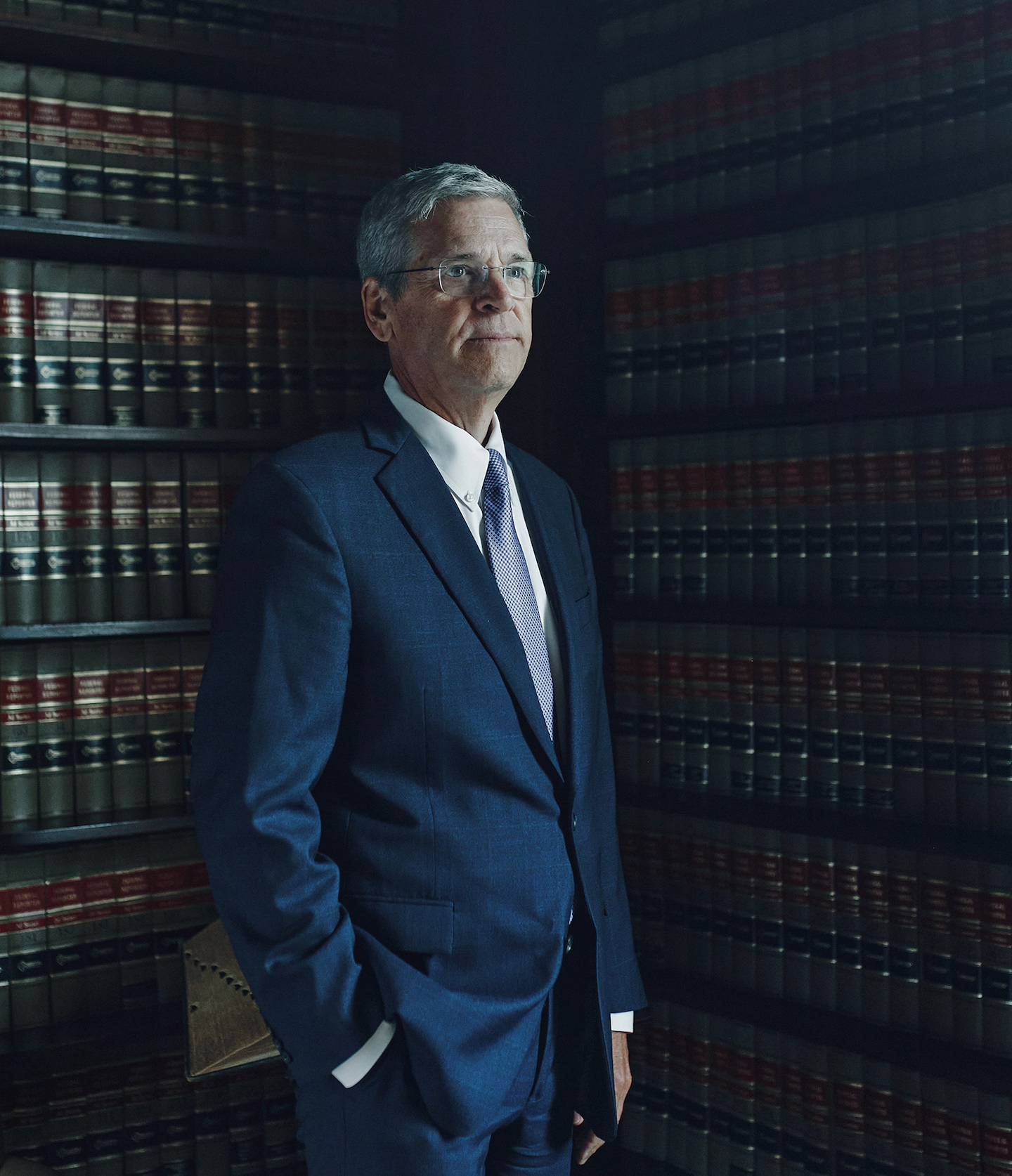
Threats against Federal Judges – 6 Vicious Threats Forced Federal Judges Into Hiding
Table of Contents
Shocking Truths Behind the Crisis Facing American Courts Today
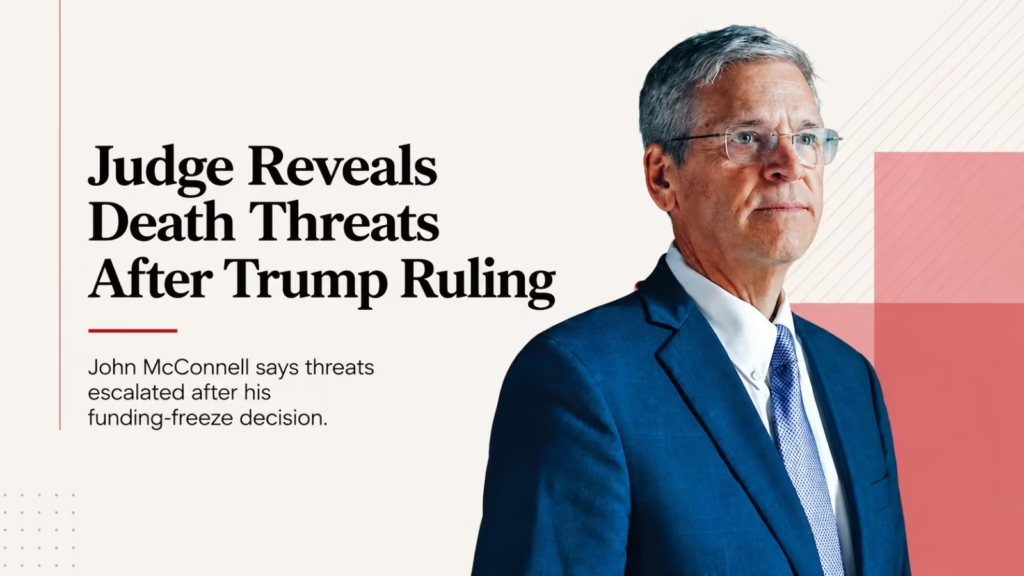
The American judicial system is facing an unprecedented security emergency. (Threats against Federal Judges Forced Federal Judges) Following high-profile legal decisions, federal jurists across the country are experiencing a terrifying wave of personal intimidation, harassment, and targeted violence. U.S. District Judge John McConnell recently stepped forward to detail the alarming reality of what happens when the courtroom battle spills directly onto judges’ doorsteps.
For comprehensive coverage on judicial safety policies, you can review updates directly via The Washington Post or monitor official updates from the U.S. Courts Website regarding institutional protections.
The Ruling That Triggered a Dangerous Backlash
The crisis intensified dramatically after McConnell, an Obama-appointed federal judge based in Rhode Island, issued a temporary block against the Trump administration’s sweeping federal funding freeze. While legal disagreements are a standard pillar of American jurisprudence, this ruling unleashed an unprecedented torrent of hostility.
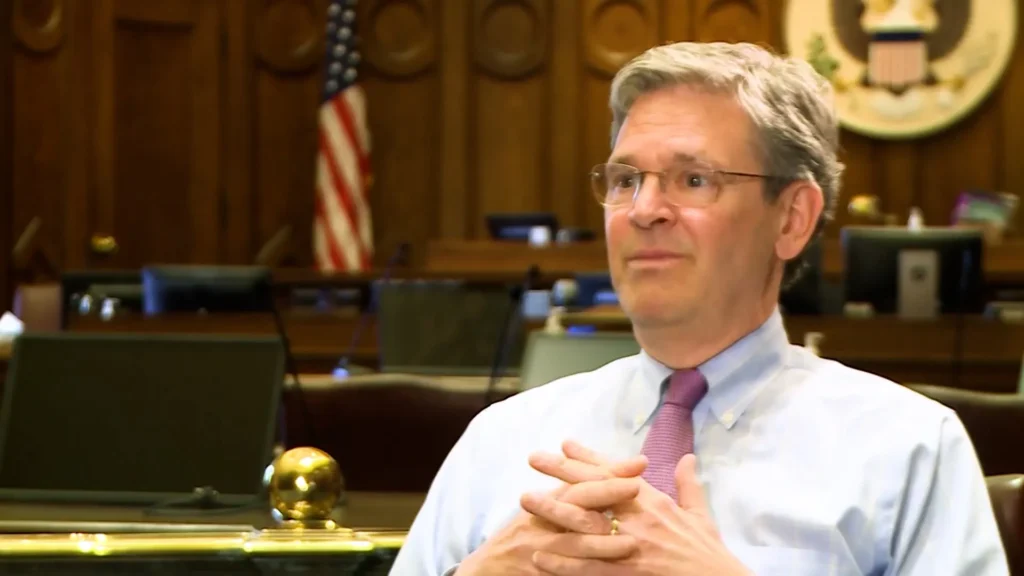
According to reports verified by the U.S. Marshals Service, McConnell faced at least six highly credible death threats shortly after the decision came down. Judicial officials note that security incidents targeting federal judges nationwide have surged dramatically over recent fiscal years, pointing to a systemic breakdown in civil discourse. Additional context regarding federal oversight and safety legislation can be tracked via resources on Reuters.
A Chilling Form of Intimidation: The “Pizza Doxxing” Phenomenon
While hundreds of abusive phone calls and hostile emails flooded the Rhode Island federal courthouse—including explicit assassination wishes left on voicemail—one specific incident crossed a terrifying psychological line.

An unsolicited pizza delivery arrived at McConnell’s private residence. Upon inspecting the order details, McConnell discovered it had been placed under the name Daniel Anderl.
For the American legal community, that name carries profound trauma. Daniel Anderl was the 20-year-old son of New Jersey federal judge Esther Salas. In July 2020, a gunman posing as a delivery driver targeted Judge Salas’s home, fatally shooting her son. Using Daniel’s name for a delivery to another sitting judge’s home was quickly recognized by authorities as a calculated psychological warning—a practice federal prosecutors have designated as “pizza doxxing”.
“I don’t think anything disturbed me as much as that did,” McConnell expressed, highlighting how modern harassment seeks to weaponize past tragedies against judicial families.
When Harassment Targets the Family
The intimidation tactics did not stop at professional disagreement or anonymous mail. Members of McConnell’s immediate family were dragged directly into the political crossfire.

Federal authorities warned McConnell that specific death threats had been made against his wife. Furthermore, his daughter became a target after far-right activist Laura Loomer published critical commentary regarding McConnell’s funding freeze ruling on social media. The post explicitly featured a photograph of McConnell’s daughter alongside her personal identifying information.
The exposure amplified exponentially when high-profile public figures, including Elon Musk, reshared the post to millions of followers on X. Reflecting on the escalation, McConnell shared a deeply personal sentiment:
- Professional Tolerance: “I signed up for whatever, I’ll take the lumps.”
- Family Impact: When the backlash reached his daughter, it felt as though “someone put a dagger through my heart.”
Supreme Court Justices Demand Urgent Action
The terrifying experiences of district judges like McConnell are mirrored at the highest levels of American law. Supreme Court Justices Elena Kagan and Amy Coney Barrett have appeared before Congress to lobby for millions of dollars in emergency security funding.
Justice Barrett faced intense public scrutiny and personal criticism following high-profile rulings on controversial topics such as tariff policies and birthright citizenship. During congressional oversight hearings, Justice Kagan openly denounced the rising tide of aggressive rhetoric, labeling current attacks against members of the judiciary as profoundly “dangerous”.
The White House Response and the Debate Over Free Speech
As federal judges sound the alarm, political leaders face mounting pressure to draw a clear line between robust public criticism and stochastic harassment.
The White House strongly rejected claims that political rhetoric from administration officials directly invites violence against judges. White House spokesperson Abigail Jackson dismissed such arguments as “deeply unserious,” asserting that the administration remains fully committed to protecting every member of the judicial branch.
Despite these assurances, legal experts and nonpartisan organizations argue that the line between political opposition and dangerous intimidation continues to blur, threatening the core independence of the American legal framework.


Bills vs Lions: Thrilling Opener, Tough Test Ahead Tonight!!!

Maria Bartiromo’s Stunning Exit Brings New Hope for Her Future

Cardinals vs Cubs:Major League Thrilling Clash Brings Joy Despite Tough Blow

New Movies Streaming – 6 Must-Watch New Movies & Shows Streaming This Weekend (July 18 – 20)

Hollie Strano’s Incredible Comeback: 1 New Radio Gig After WKYC Exit

911 outage – Pennsylvania experiencing problems with 911 calls statewide
-
 Entertainment1 year ago
New Movies Streaming – 6 Must-Watch New Movies & Shows Streaming This Weekend (July 18 – 20)
-
 News1 year ago
Hollie Strano’s Incredible Comeback: 1 New Radio Gig After WKYC Exit
-
 News1 year ago
911 outage – Pennsylvania experiencing problems with 911 calls statewide
-
 News1 year ago
Type 1 Diabetes Barbie Doll – A Step Toward Inclusivity in Toys
-

 Entertainment11 months ago
Donna Jean Godchaux – Heartbreaking Loss: Music Legend Dies at 78
-

 Sports1 year ago
Liverpool vs Athletic Club: Squad Update – Van Dijk, Bradley, Alisson, Gomez Ruled Out
-

 News1 year ago
NYC Subway Flood – Live Updates: NYC Subway Flood Disrupts Commute After Flash Flooding
-

 News1 year ago
Jannik Sinner and Carlos Alcaraz set for Wimbledon final showdown after semifinal wins